 English
 Español
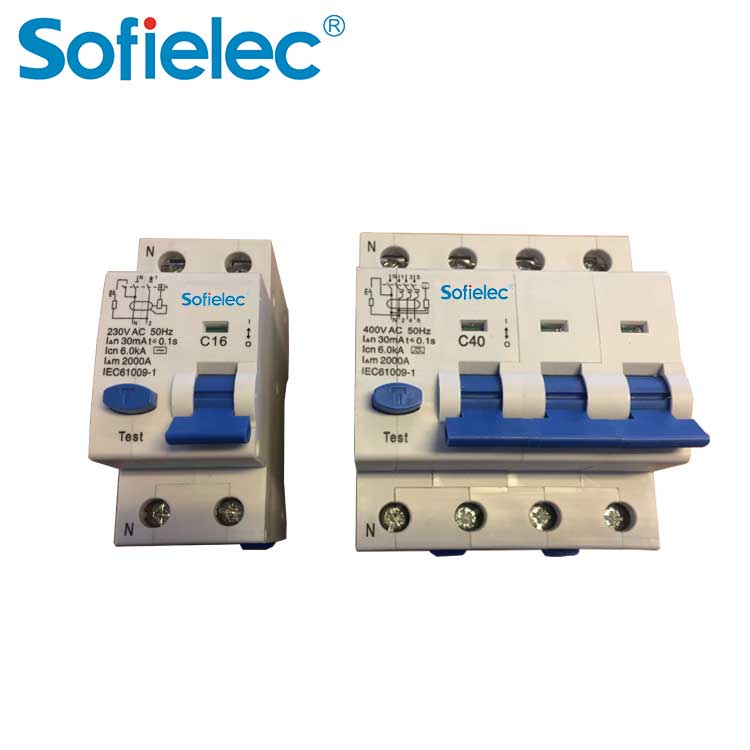
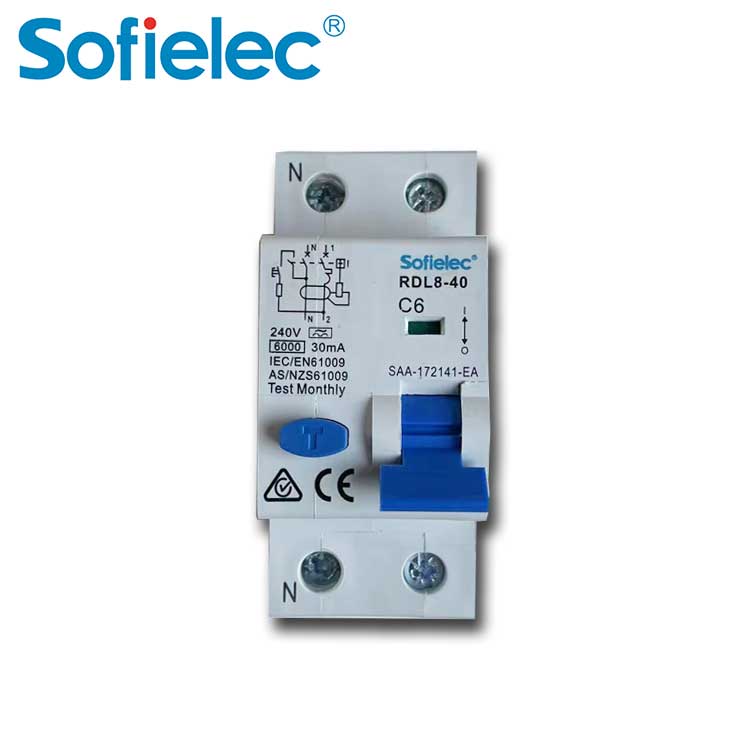
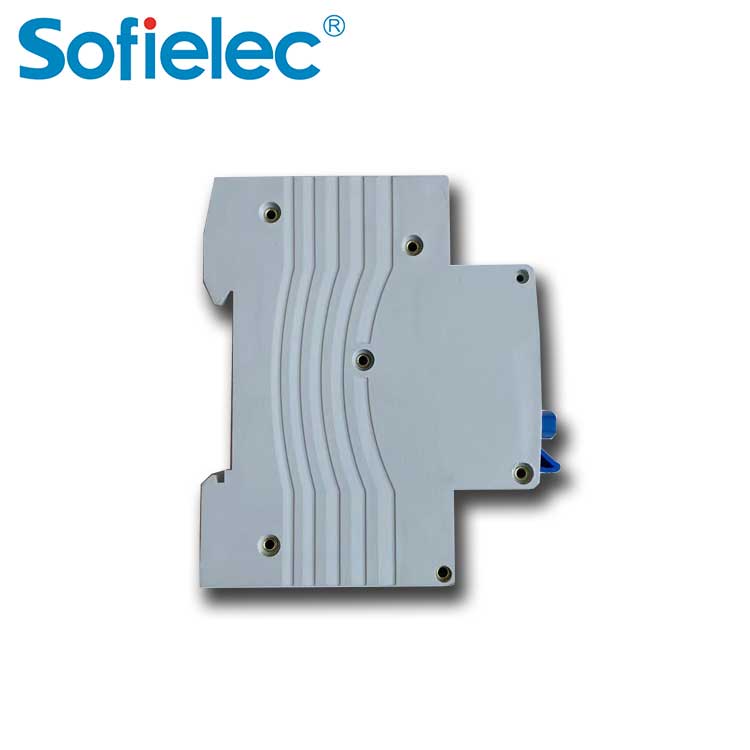
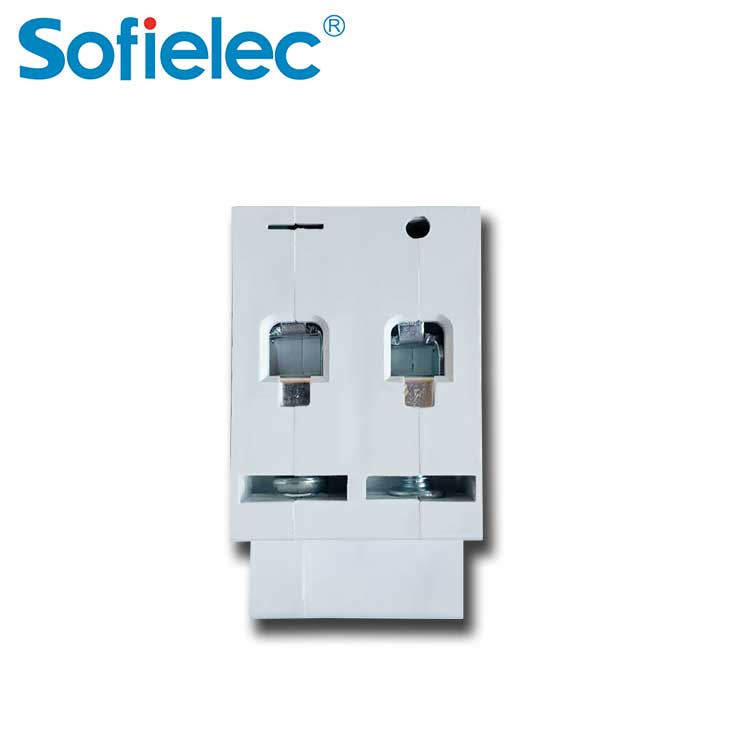
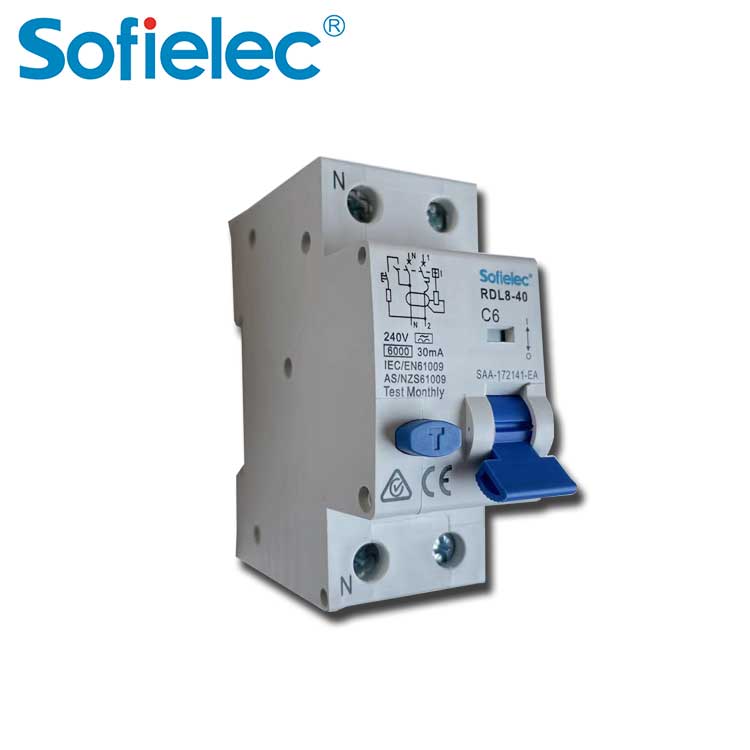
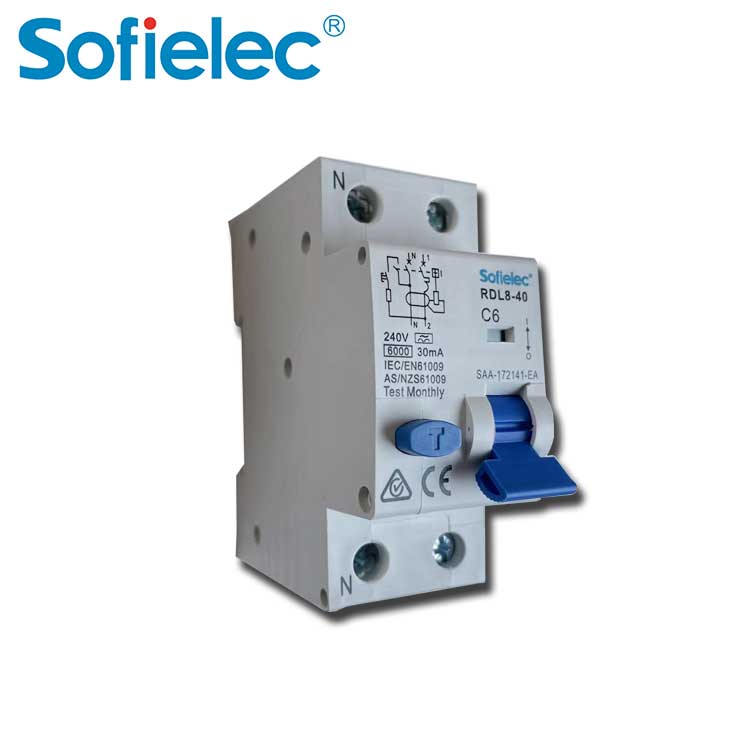
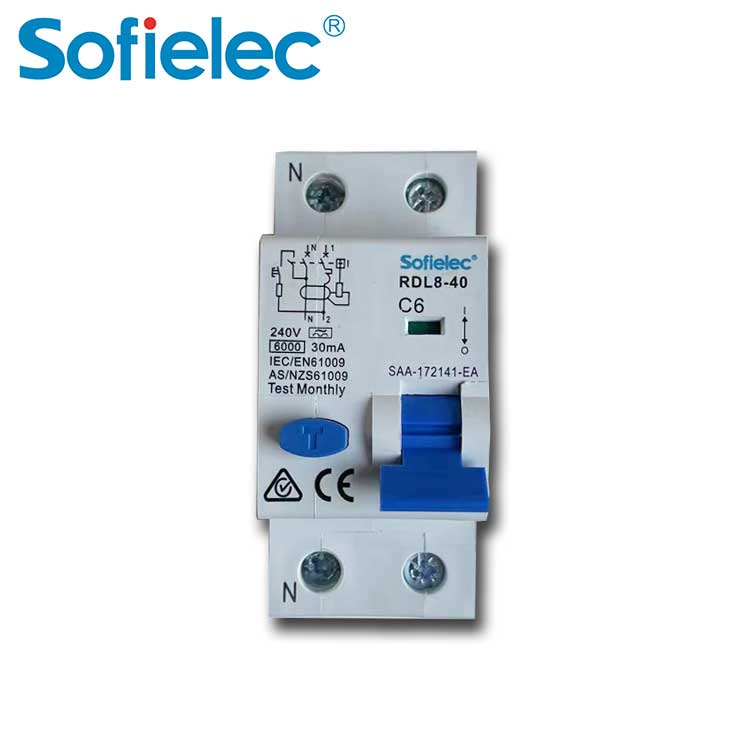
Provides protection against earth fault/leakage current, short-circuit, overload, and function of isolation Provides complementary protection against direct contact by human body Effectively protects electric equipment against insulating failure Provides comprehensive protection to household and commercial distribution systems
|
Rated voltage |
230V/400V,240/415V | ||||
| Rated current |
|
||||
| Rated residual operating current | 0.03A、0.1A、0.3A | ||||
| Rated residual non-operating current | 0.5I△n | ||||
| DC component case | AC type, A type (except 4P electromagnetic type) | ||||
| number of poles | 1P+N/3P+N | ||||
| Instantaneous trip type | Type B, Type C | ||||
| Rated short-circuit breaking capacity | 6000A | ||||
| Rated residual making and breaking capacity | 500A | ||||
| Protection class | IP20 | ||||
| Installation category | Class III | ||||
| pollution level | level 2 |
Residual current action breaking time
| In(A) | I△n(A) | Breaking time (s) when the residual current is equal to the following value | ||||||
| I△n | 2I△n | 5I△n | 5A、10A、20A、50A、100A、200A | I△t | ||||
| 6~40A | 0.03、0.1、0.3 | 0.1 | 0.05 | 0.04 | 0.04 | 0.04 | ||
| Note: a. 5A, 10A, 20A, 50A, 100A, 200A tests are not tested for current values that are greater than the lower limit of the current instantaneous tripping range; b. Overcurrent instantaneous tripping when I△t is equal to Type B and Type C The test is carried out at the current at the lower limit of the range.。 | ||||||||
Overcurrent protection tripping characteristics (reference temperature 30℃)
| test | Type | Test current | starting state | Trip or not trip time limit | expected outcome | Remark | ||
| a | B、C | 1.13In | cold state | t≤1h | Does not trip | |||
| b | B、C | 1.45In | Immediately after a test | t<1h | trip | The current rises steadily within 5s | ||
| c | B、C | 2.55In | cold state | 1s | trip | |||
| 1s>32A) | ||||||||
| d | B | 3In | cold state | t≤0.1S | Does not trip | |||
| 5In | t<0.1S | trip | ||||||
| e | C | 5In | t≤0.1S | Does not trip | ||||
| 10In | t<0.1S | trip | ||||||
Mechanical and electrical life
| project | Times (times) | Operating frequency (times/hour) | Rated current (A) | |||||
| Electrical life | 4000 | 240 | 6~32 | |||||
| Mechanical life | 10000 | 120 | 40 | |||||
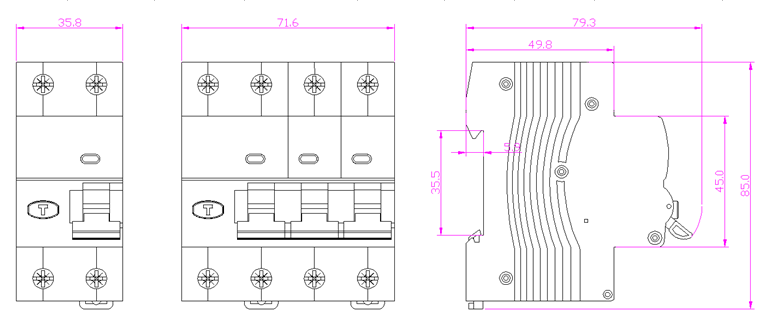
Shape and installation dimensions
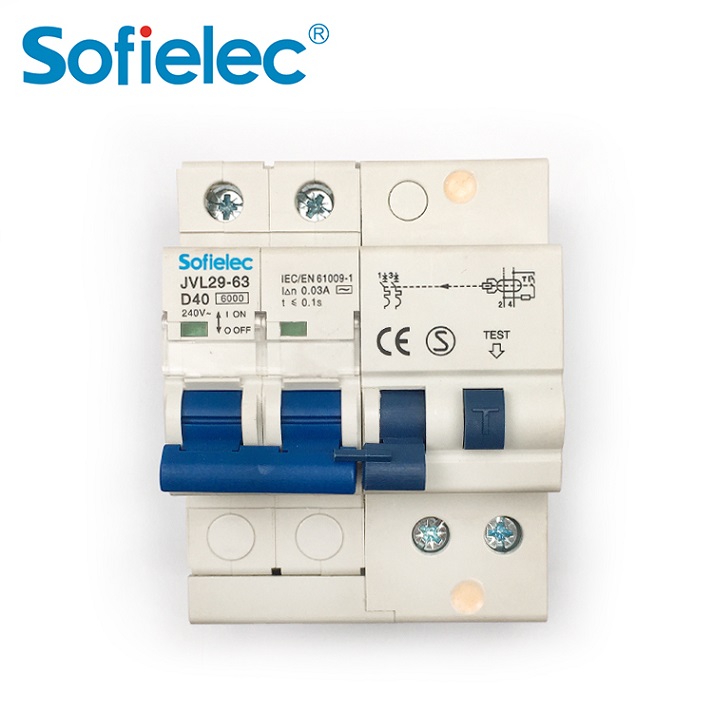
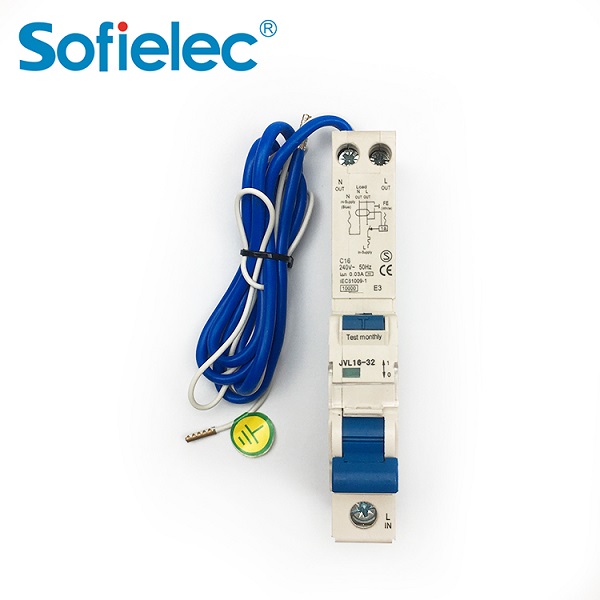
> How Does a Metal Distribution Box Protect UK Circuits?
A Metal Distribution Box like the CJDB series protects circuit breakers in UK consumer units with 100A rating, IP3X safety, and 4-way to 22-way configurations.
> Is an SPD Surge Protective Device Rated for 80kA Imax?
An SPD Surge Protective Device with 5-80kA discharge capacity, built-in disconnector, and visual status window — built for low-voltage distribution system protection...
> Does a Float Switch Need IP68 for Hot Water?
A Float Switch with IP68 sealing, AC 220V rating, and 60°C water temperature tolerance — built for reliable liquid level control in pumps and tanks.
> Does a Circuit Breaker Need Both Overcurrent and Leakage Protection?
A magnetic RCBO that combines overcurrent and earth leakage protection in a compact two-module design — featuring 10kA breaking capacity and CE approval for resident...