 English
 Español
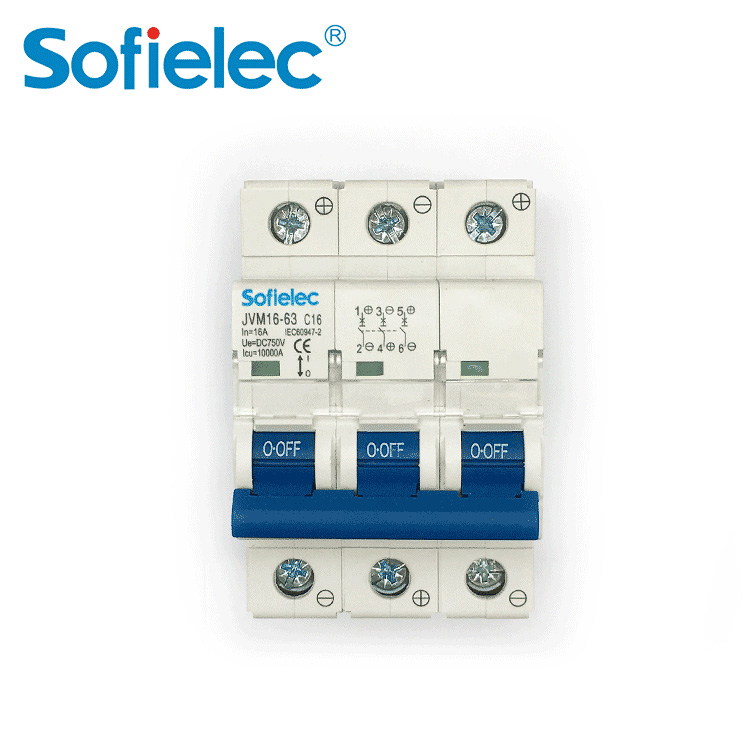
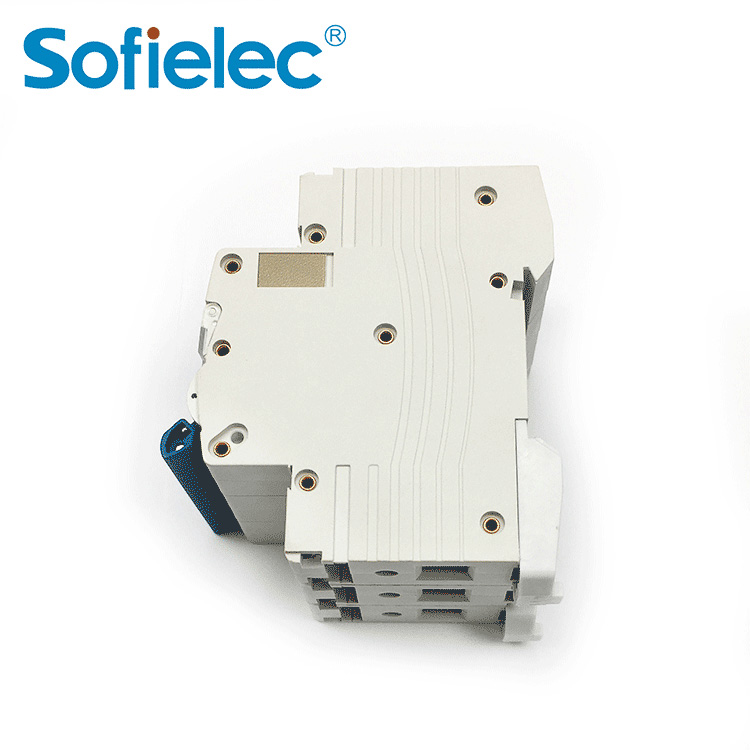
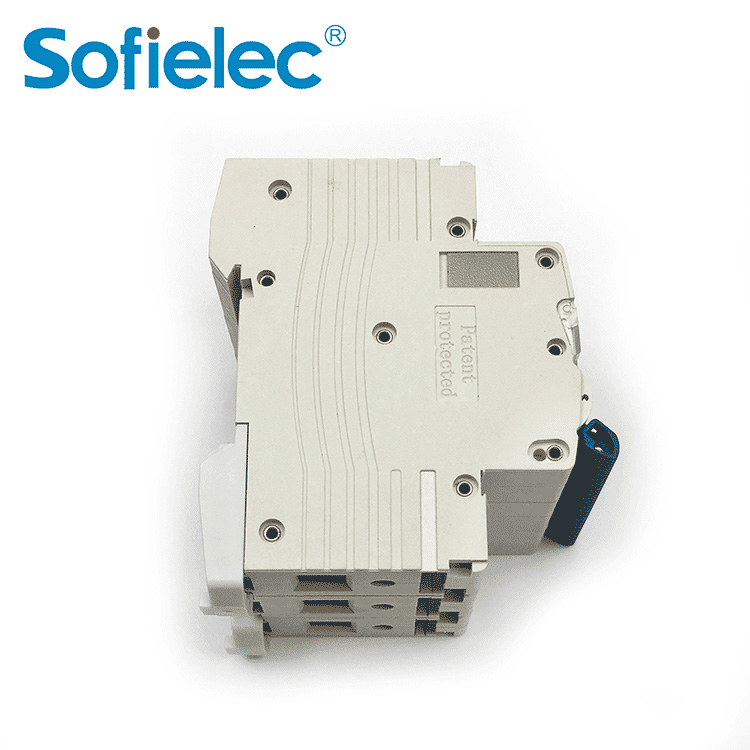
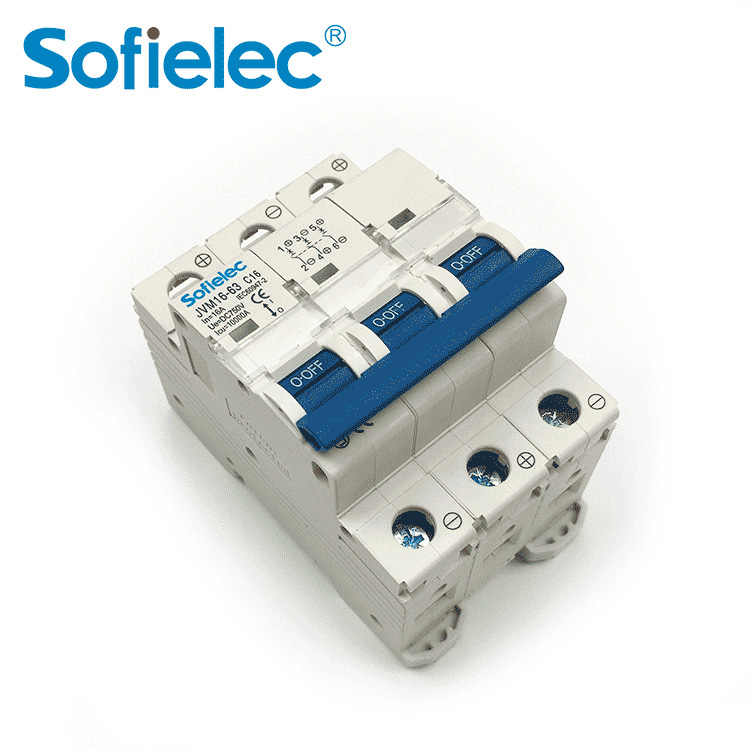
| Categories | DC Series |
| Model | DC JVM16-63 |
| Pole No | 1,2 |
| Rated Voltage | 1P:250V 2P:500V |
| Rated Current in(A) | 1,2,3,4,6,10,13,16,20,25,32,40,50,63 |
| Tripping Curve | B,C |
| Rated short-circuit breaking capacity | 10KA |
| Rated impluse withstand voltage | 6.2KV |
| Eletro-mechanical | 10000 |
| Screw terminal | M5 |
| Rated torque | 2.0N.m |
Construction and Feature
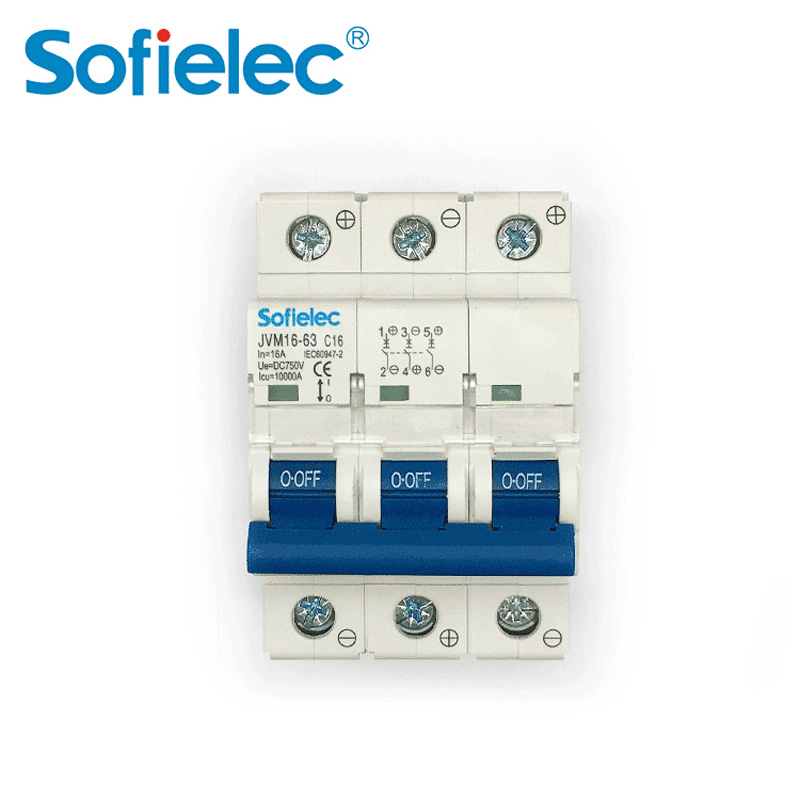
The state-of-art design
Elegant appearance; cover and handle in arc shape make comfortable operation.
Contact position indicating window
Transparent cover designed to carry label.
Handle central-staying function for circuit fault indicating
In case of overload, to protected circuit, MCB handle trips and stays at central
position, which enables a quick solution to the faulty line. The handle cannot stay in
such position when operatedmanually.
High short-circuit capacity
High short-circuit capacity 10KA for whole range and 15kA capacity for current rating
up to 40A thanks to the powerful electric arc extinguishing system.
Long electrical endurance up to 6000 cycles thanks to quick making mechanism.
Handle padlock device
MCB handle can be locked either at “ON” position or at“OFF” position to
prevent unwanted operation of the product.
Screw terminal lock device
The lock device prevents unwanted or casual dismounting of connected terminals.
Technical Data
■ Pole No.: 1, 2
■ Rated Voltage: 1P:250V 2P:500V
■ Rated Current In(A): 1,2, 3, 4,6, 10, 13, 16, 20, 25, 32, 40, 50, 63;
■ Tripping Curve: B, C
■ Rated short-circuit breaking capacity: 10kA
■ Rated impulse withstand voltage: 6.2KV
■ Eletro-mechanical endurance: 10000
■ Screw terminal: M5
■ Rated torque: 2.0N.m
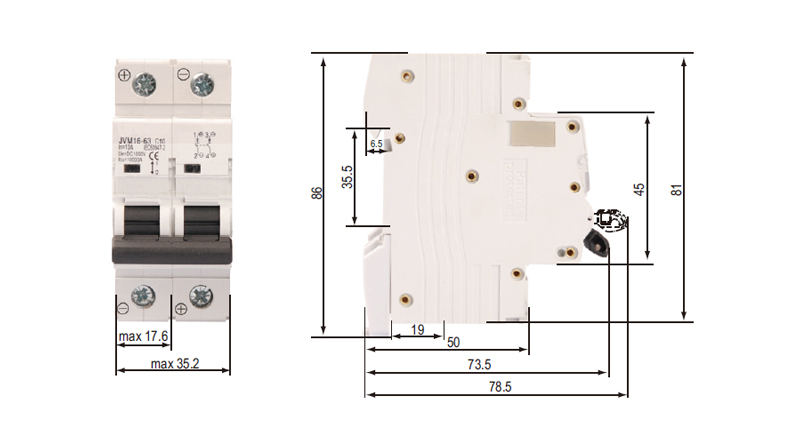
Overall & Installation Dimensions
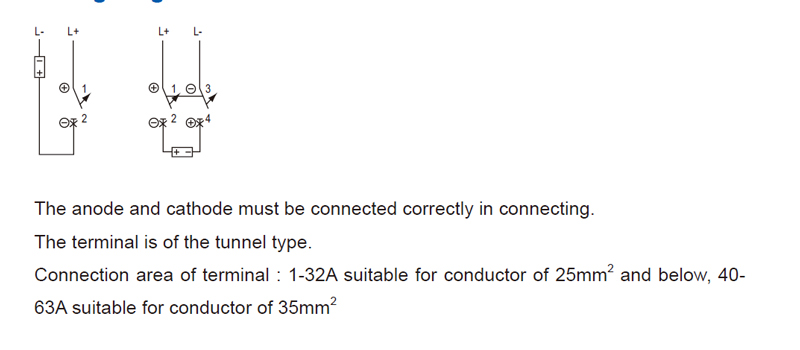
Wiring Diagram
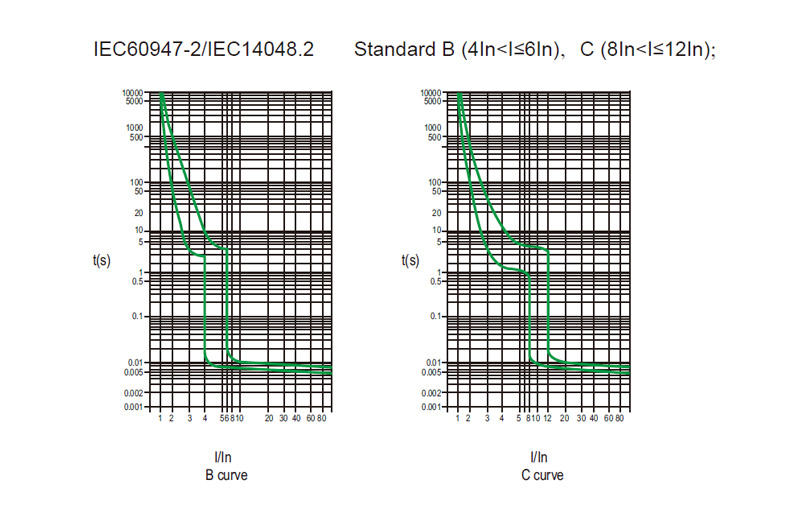
Overload Current Protection Characteristics
| Test Procedure | Type | Initial State | Test Current | Tripping or Non-tripping Time Limit | Expected Result | Remark |
| A | B、C | cold | 1.05ln | t≥1h(In≤63A) tz2h(ln> 63A) | no tripping | |
| B | B、C | after test a | 1.3ln | t< 1h(Ins63A) t< 2h(ln> 63A) | tripping | Curent in the5s in the increase of stability |
| C | B、C | cold | 2ln | 10s | tripping | |
| 20s 63A) | ||||||
| D | B | cold | 4ln | t≤0.2s | no tripping | Turn on the auxiliary switch to close the current |
| C | 8ln | |||||
| E | B | cold | 6ln | t<0.2s | tripping | |
| C | 12ln |
Video
> Does a Float Switch Need IP68 for Hot Water?
A Float Switch with IP68 sealing, AC 220V rating, and 60°C water temperature tolerance — built for reliable liquid level control in pumps and tanks.
> Does a Circuit Breaker Need Both Overcurrent and Leakage Protection?
A magnetic RCBO that combines overcurrent and earth leakage protection in a compact two-module design — featuring 10kA breaking capacity and CE approval for resident...
> What Makes the ASFT Series Outperform Other Float Switches?
A float switch with integrated square-axis multi-pole design, welding-process contacts with silver solder pads, and bite-process terminal blocks — built for reliable...
> How Does a DC Series Circuit Breaker Speed Up Fault Finding?
A DC series circuit breaker with 1-63A ratings, 10kA breaking capacity, 6.2kV impulse withstand, and central-staying trip indication — built for reliable low-voltage...