English
 Español
What Makes a Charging Connector Reliable for Daily EV Charging?
You‘re specifying components for an EV charging station, a portable charger, or a vehicle-side inlet. The connector is the point of contact—the interface that drivers handle every day, the component that carries high current under repeated use, the part that must work reliably in rain, heat, and cold.
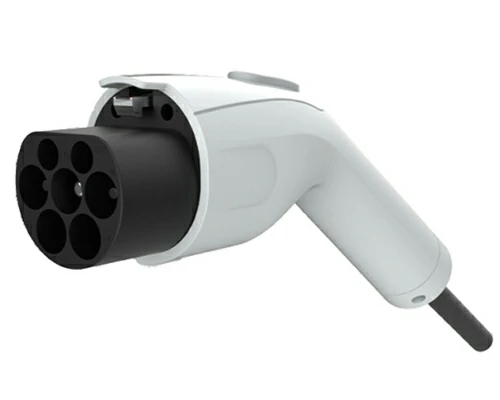
A Charging Connector might look simple, but its design and construction determine whether your charging equipment delivers years of reliable service or becomes a source of customer complaints. Sofielec‘s GB AC charging connector accessories offer simple and elegant appearance, comfortable touch and ergonomic compliance, and safe and reliable performance meeting vehicle rollover requirements.
This guide covers what makes a charging connector reliable—from mechanical life to temperature performance to standards compatibility—and how to choose the right one for your EV charging application.
Built for the Daily Demands of EV Charging
EV charging connectors face a unique combination of stresses: repeated insertion and removal, high current, and outdoor exposure. The design must address all three.
Mechanical Life That Matches Usage
A public EV charger may be used dozens of times per day. The connector must withstand this repeated handling without degradation. Sofielec‘s GB DC charging gun accessories support fast charging for electric vehicles, reaching up to 600A, with a mechanical life of ≥10,000 times. For AC connectors, similar durability standards apply. This cycle life ensures that the connector remains functional over years of daily use.
Temperature Rise That Protects Components
Temperature rise is a critical performance metric for high-current connectors. Excessive heat accelerates insulation aging, increases contact resistance, and can create safety hazards. Sofielec‘s DC connectors achieve a temperature rise of <50K (after 10,000 insertion and extraction tests) . This thermal stability ensures safe operation even under sustained high-current charging.
Ergonomic Design for Daily Handling
Drivers handle charging connectors multiple times per week. A connector that’s uncomfortable to grip or difficult to insert creates a poor user experience. Sofielec‘s connectors feature comfortable touch and ergonomic compliance, with an appearance that is simple and elegant, perfectly matching vehicle modes. Good ergonomics reduce user frustration and minimize the risk of improper insertion that can damage the connector or the vehicle inlet.
Specifications That Define Performance
The technical specifications of a charging connector tell you what it can handle. Here‘s what the numbers mean for your application.
Current Capacity — From AC to DC
AC charging connectors handle lower currents—typically 16A to 32A for residential and workplace charging. DC connectors handle significantly higher currents. Sofielec‘s GB DC charging gun accessories reach up to 600A. The current rating must match your charger’s output capability. Underspecifying current capacity leads to overheating; overspecifying adds unnecessary cost.
Mechanical Life — ≥10,000 Cycles
The mechanical life rating of ≥10,000 times means the connector can be inserted and removed 10,000 times without performance degradation. For a public charging station used 30 times per day, this translates to nearly one year of service. For a private charger used once per day, it‘s over 27 years. This durability is essential for high-traffic installations where reliability is critical.
Temperature Rise — ≤50K
Temperature rise of ≤50K (after 10,000 insertion and extraction tests) indicates the connector‘s ability to dissipate heat under load. Lower temperature rise means less stress on insulation materials and longer component life. For high-power DC charging, this thermal performance is essential for safety and reliability.
Standards Compatibility — One Platform, Multiple Markets
EV charging connectors must meet different standards depending on the region. A supplier that offers multiple standard options simplifies global procurement.
GB/T Standard — For the Chinese Market
The GB/T standard is the requirement for EV charging in China. Sofielec offers GB AC charging connector accessories and GB AC charging gun accessories in multiple models, including Model A, Model B with digital display, and Model C. The GB DC charging gun accessories support fast charging with high-current capability.
EU and US Standards — For Global Compatibility
Beyond GB/T, Sofielec offers EU Standard AC Charging Connector Accessories, European Standard AC Charging Inlet Connector Accessories, and US Standard AC EV Charging Plug Parts. This range allows manufacturers to source connectors for multiple regional markets from a single supplier.
Why Standards Compliance Matters
Using connectors that meet the relevant regional standards ensures compatibility with vehicles and charging infrastructure in that market. Non-compliant connectors can lead to interoperability issues, safety risks, and regulatory non-compliance. For OEMs and charging station manufacturers, sourcing from a supplier that covers multiple standards simplifies inventory management and reduces qualification costs.
Where These Connectors Are Used
Charging connectors are found across the EV charging ecosystem—from the vehicle itself to the charging infrastructure.
AC Charging Stations
Residential and workplace AC charging stations use GB AC charging connectors to deliver 7kW to 22kW of power. The connector’s ergonomic design and mechanical durability are critical for user satisfaction in these daily-use applications.
DC Fast Chargers
Public DC fast chargers require high-current connectors that can handle up to 600A. The temperature rise performance and mechanical life of the connector are critical for the high utilization rates of public charging infrastructure. Sofielec‘s GB DC charging gun accessories are designed for this demanding application.
Vehicle Inlets
Vehicle-side charging inlets accept the connector from the charging cable. The inlet must be compatible with the connector standard and provide reliable sealing against the elements. Sofielec’s European Standard AC Charging Inlet Connector Accessories are designed for this application.
| Application | Connector Type | Key Requirement |
|---|---|---|
| Residential AC charging | GB AC charging connector | Ergonomic design, daily use durability |
| Public DC fast charging | GB DC charging gun | ≥10,000 cycles, ≤50K temperature rise |
| Vehicle side | AC charging inlet | Standards compliance, weather sealing |
| Portable charger | AC charging gun cable | Flexibility, compact design |
What Manufacturers Want to Know About EV Connectors
What’s the difference between AC and DC charging connectors?
AC connectors deliver power from the grid to the vehicle‘s onboard charger, which converts it to DC. DC connectors bypass the onboard charger, delivering DC power directly to the battery. DC connectors must handle higher currents—up to 600A—and therefore require more robust thermal management and contact design. Sofielec offers both AC and DC options to match different charging applications.
What is the expected service life of a charging connector?
The mechanical life rating of ≥10,000 cycles is a key indicator. For a public charger used 30 times per day, this translates to roughly one year of service. However, the connector’s lifespan also depends on environmental conditions, maintenance, and proper handling. For high-traffic installations, consider stocking replacement connectors or selecting models with field-replaceable contacts.
Can the same connector be used for both AC and DC charging?
No. AC and DC connectors use different pin configurations, contact designs, and safety interlocks. Using an AC connector for DC charging (or vice versa) is unsafe and can damage the vehicle, the charger, or both. Always match the connector type to the charging application. Sofielec offers separate AC and DC product lines for this reason.
Choosing the Right Connector for Your Application
Selecting the right charging connector requires matching the specifications to your application‘s demands.
Match Current Rating to Charger Output
The connector’s current rating must exceed the charger‘s maximum output. For AC chargers up to 22kW, a 32A connector is typically sufficient. For DC fast chargers, current ratings can reach 600A. Choose a connector with adequate margin to avoid overheating and ensure long service life.
Consider the Installation Environment
Connectors used outdoors must be sealed against water and dust ingress. While Sofielec’s product descriptions emphasize safety and reliability, specific IP ratings should be confirmed with the supplier based on your application‘s environmental requirements. For high-usage public stations, prioritize mechanical durability and thermal performance.
Verify Standards Compliance
Confirm that the connector meets the relevant regional standards for your target market. Sofielec offers GB/T, EU, and US standard options, covering the major EV charging markets. Standards compliance ensures interoperability with vehicles and infrastructure in that region.
Sofielec manufactures a range of charging connector accessories for EV applications, covering GB AC charging connector accessories, GB DC charging gun accessories, and EU and US standard options. Product features include simple and elegant appearance, comfortable touch and ergonomic compliance, and safe and reliable performance. For DC applications, the connectors support fast charging up to 600A, with mechanical life of ≥10,000 times and temperature rise of <50K.
Request GB AC Charging Connector Samples
The right charging connector makes the difference between a charging station that operates reliably and one that generates service calls. Whether you’re designing AC charging stations, DC fast chargers, or vehicle inlets, the connector‘s mechanical life, temperature performance, and standards compatibility are critical factors.
Contact Sofielec’s team to request samples, discuss technical specifications, and confirm standards compliance for your specific application.