English
 Español

At What Current Threshold Does This Permanent Magnetic Relay Trip Inside the RCBO or RCCB?
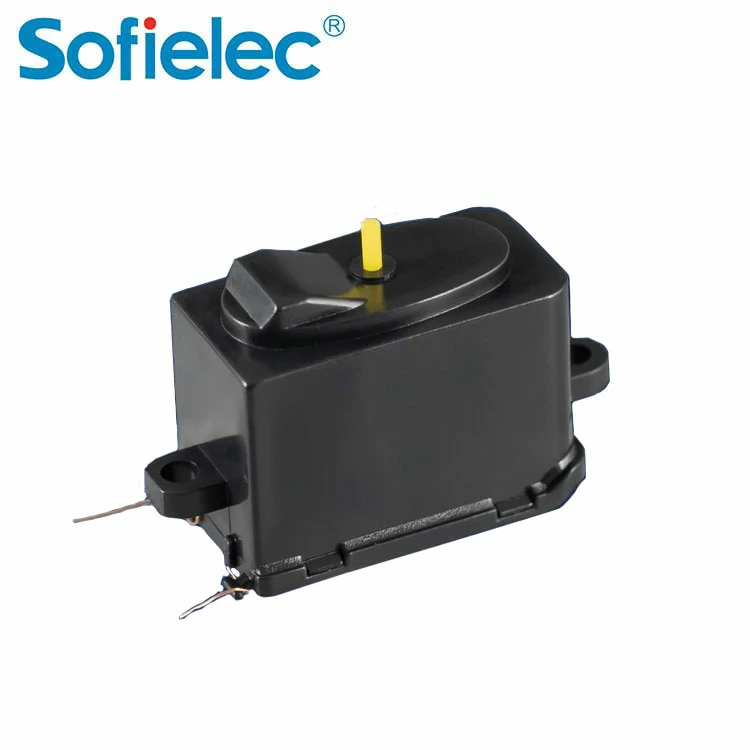
The trip threshold defines where a residual current release moves from monitoring the circuit to driving the breaker open: below that point the mechanism stays ready, and once the sensed current crosses it, the release snaps out to cut the supply. The threshold figures are set by the coil winding and tested against the breaker rating the assembly serves, so matching the right column to the unit keeps the protection curve consistent. Relay assemblies of this permanent magnetic type are fitted to RCCB and RCBO type 4 gear, with the action current, trip current, and trip voltage for the 40A and 63A columns set out below.
What the Type 4 Release Covers
What Action Current and Trip Current Does the Release Use?
Both rated columns carry an action current of 30mA, the residual current level the release monitors. The actual trip current splits by rating: the 40A version (160 turns) trips at 7-9mA, while the 63A version (500 turns) trips at 2-3mA. The gap between the monitored action current and the trip threshold reflects how the magnetic coil is wound for each breaker size, so the release column should be matched to the breaker rating rather than swapped across sizes.
What Trip Voltage and Coil Values Go With That Threshold?
The tripping voltage reads 15-20mV on the 40A column and 40-60mV on the 63A column. Coil impedance runs 2.5-4.6Ω with resistance 1.3-1.6Ω on the 40A version, and 30-45Ω impedance with 8.6-8.9Ω resistance on the 63A version. These figures are the electromagnetic release test parameters recorded when the release reaches its trip point, and they are used to verify coil performance before the part goes into the breaker assembly.
How Does the Release Reset After the Trip?
The product detects changes in current and quickly cuts off the circuit, protecting electrical equipment from damage, and it features strong cutting ability and automatic reset for various scales of electrical equipment and circuit protection needs. After tripping, the suggested operating body restoring force is 1.2-1.3N, and the suggested recovery rate runs 0.5-0.8m/s, which governs how the mechanism feeds back to its ready state. The push rod free stroke is 1.8mm, and the traverse length is 100±5mm across the assembly.
How the Permanent Magnetic Release Sits in the Residual Current Breaker
Drive Output, Stroke, and Mechanism Feedback
The release sits inside the RCCB or RCBO body and drives the trip mechanism through its push rod once the sensed current crosses the threshold. The thrust figures drop with push rod travel: at 0.5mm stroke the force is at least 0.7N, at 1.0mm it is at least 0.4N, and at 1.6mm it is at least 0.2N, matching the mechanical load the breaker mechanism presents at each stage of travel. The automatic reset function returns the assembly to its ready state after the trip, and the restoring force and recovery rate keep the mechanism feeding back consistently between operations.
Where the Release Fits Across Low-Voltage Protection Gear
RCBO and RCCB Assemblies
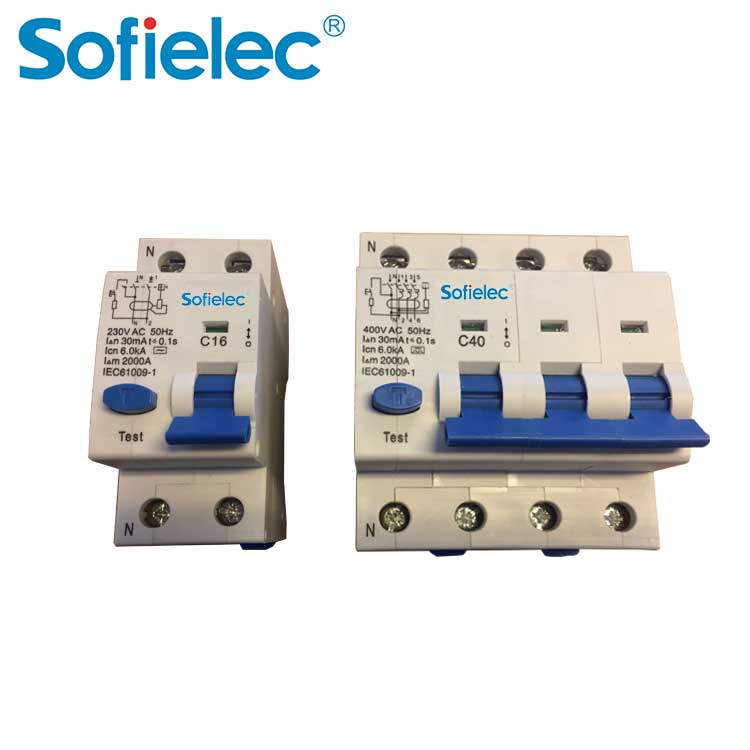
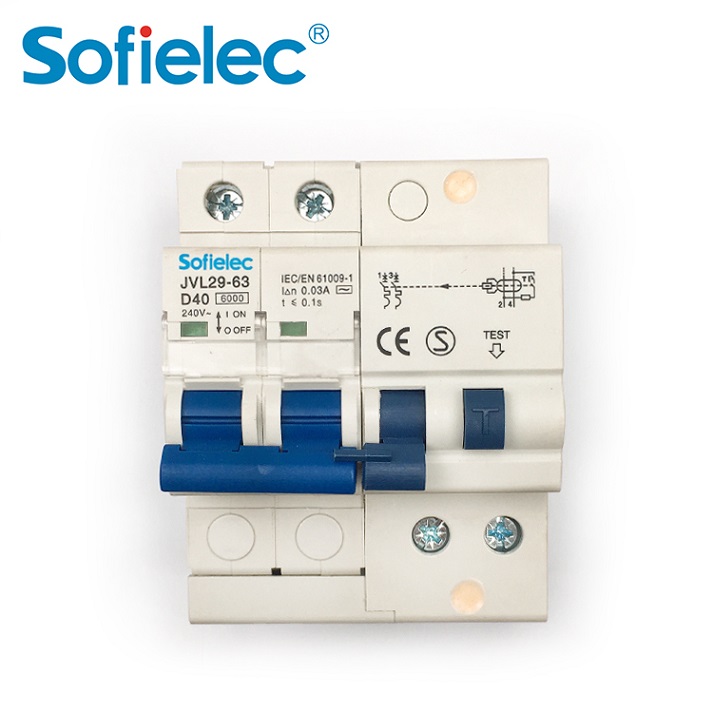
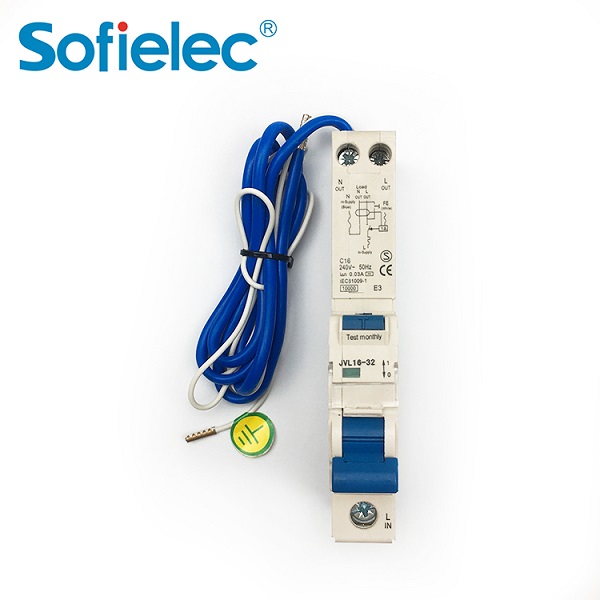
The release is built for residual current protection units, both RCCB and RCBO type 4 arrangements. RCBO assemblies combine earth-leakage, short-circuit, and over-current protection in one breaker, while RCCB units handle the residual current trip function on their own; the magnetic release supplies the trip drive in either layout. Related breaker formats in the same supply range cover 1P+N and 3P+N 40A RCBOs in regular RCCB body size, 6kA rating, B and C curves, 0.03A, 0.1A, and 0.3A sensitivity, in AC and A types.
Residential and Commercial Terminal Distribution
The end equipment serves residential and commercial terminal distribution, where low-voltage breakers protect final circuits against earth leakage, overload, and short-circuit faults. The release is an internal component rather than a panel-mounted device, so its dimensions and stroke are matched to the breaker body it assembles into, not to a standalone switchboard cutout. Buyers supplying breaker assemblies should treat the release as a matched internal part of the residual current unit.
What the Electrical Parameters Say About Coil and Output
Impedance, Resistance, and Trip Voltage by Rating
The higher-impedance 63A winding pairs with its 40-60mV tripping voltage and 30-45Ω impedance, while the lower-impedance 40A winding pairs with its 15-20mV figure and 2.5-4.6Ω impedance. The resistance figures separate the two columns in the same direction: 8.6-8.9Ω for the 63A version and 1.3-1.6Ω for the 40A version. When a release is being matched to a breaker, these coil values should be checked against the target breaker's magnetic circuit, alongside the trip current and stroke figures listed in the parameter table.
The Release Test Parameters at a Glance
What the Product Page Lists Up Front
The table groups each parameter across the 40A and 63A columns exactly as listed, so a buyer can match the release to the breaker rating before an enquiry.
| Parameter | 40A (160 turns) | 63A (500 turns) |
|---|---|---|
| Action current | 30mA | 30mA |
| Trip current | 7-9mA | 2-3mA |
| Tripping voltage | 15-20mV | 40-60mV |
| Impedance | 2.5-4.6Ω | 30-45Ω |
| Resistance | 1.3-1.6Ω | 8.6-8.9Ω |
| Thrust @ 0.5 / 1.0 / 1.6mm | ≥0.7N / ≥0.4N / ≥0.2N | ≥0.7N / ≥0.4N / ≥0.2N |
| Push rod free stroke | 1.8mm | 1.8mm |
| Restoring force | 1.2-1.3N | 1.2-1.3N |
| Recovery rate | 0.5-0.8m/s | 0.5-0.8m/s |
| Ambient temperature | -25°C to 80°C | -25°C to 80°C |
| Average life | >5000 cycles | >5000 cycles |
| Climate test | IEC61008/EN61008 tested | IEC61008/EN61008 tested |
| Traverse length | 100±5mm | 100±5mm |
Which Standards and Approvals Cover the Range
The release climate test is carried out to IEC61008/EN61008, the residual current breaker standard referenced on the product page. The broader Sofielec protection range holds approvals including IEC CB, SEMKO, CE, CCC, SAA, KEMA, TUV, and UL, produced under an ISO9001:2015 quality system compliant with IEC standards. Certifications for a specific release column should be confirmed against the breaker model and destination market on the enquiry.
How the Factory Supplies Protection Components and Breakers
Experience, Product Range, and Production Setup
Yueqing Sofielec Electrical Co, Ltd. brings more than 20 years of experience in low-voltage circuit protection for residential and commercial terminal distribution worldwide. The main product range covers MCB, RCD, RCBO, isolator, SPD, contactors, relays, timers, fuses, AFDD, and electrical circuit breakers, with the 10kA series reaching a monthly output of 50,000 pieces. A series of automation equipment supports production, and the factory pairs pre-sale communication to understand actual needs with ongoing technical support and quality assurance under the ISO9001 system.
Sofielec, the Relay, and the Enquiry
What the Manufacturer Supplies
Sofielec supplies the Permanent Magnetic Relay for RCCB RCBO type 4 as an internal release component for residual current breaker assemblies, alongside the RCBO, RCCB, MCB, and protection breaker range built on the same production and quality systems. The release columns listed cover 40A and 63A breaker matching, with the coil, stroke, and trip parameters shown in the table above, and OEM supply can be aligned to the breaker model being assembled.
What to Send With the Enquiry
Send these so the release column and matching can be confirmed on the first pass:
- Breaker rating: 40A or 63A, and the corresponding breaker model or body size.
- Circuit type: RCCB or RCBO, AC or A type, and the pole arrangement of the unit.
- Sensitivity and curve: residual current rating such as 30mA, 100mA, or 300mA, plus B or C curve where applicable.
- Application market: destination country and the certification or standard documentation required.
- Order quantity and any custom coil, stroke, or packaging requirement for the assembly run.
A Relay order is settled by the breaker rating and circuit type first, so those two details narrow the release column before coil parameters, approvals, and quantities are worked out.
Send the Breaker Rating and the Circuit Type
What to Put in the Message
Put the breaker rating, the RCCB or RCBO circuit type, and the residual current sensitivity in the first note. Those three decide the release match; approvals, coil details, and quantity follow after.
Send them through our request a quotation form and we'll come back with a Relay release configuration matched to your breaker rating, circuit type, and assembly volume.