English
 Español

Why Does a Wi-Fi MCB Need a Neutral Connection?
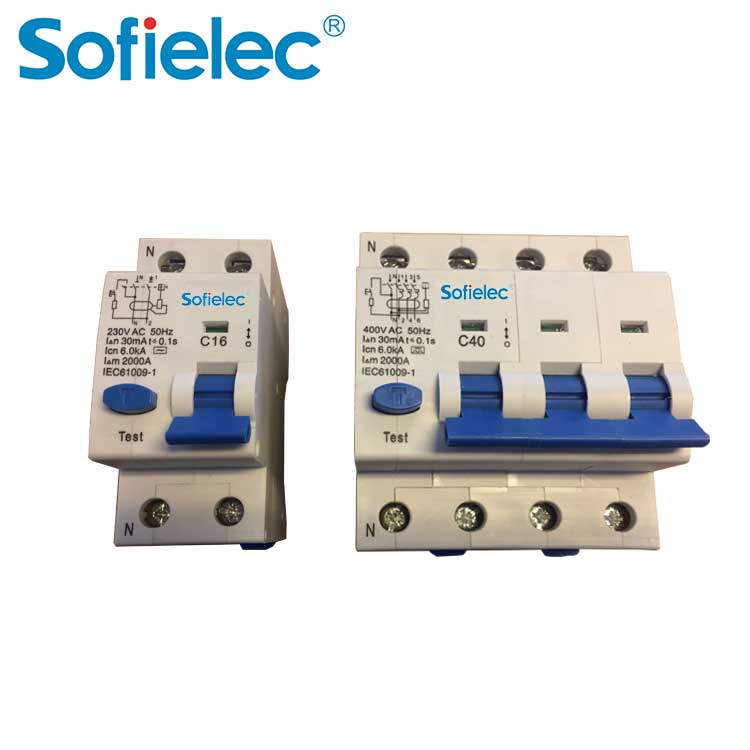
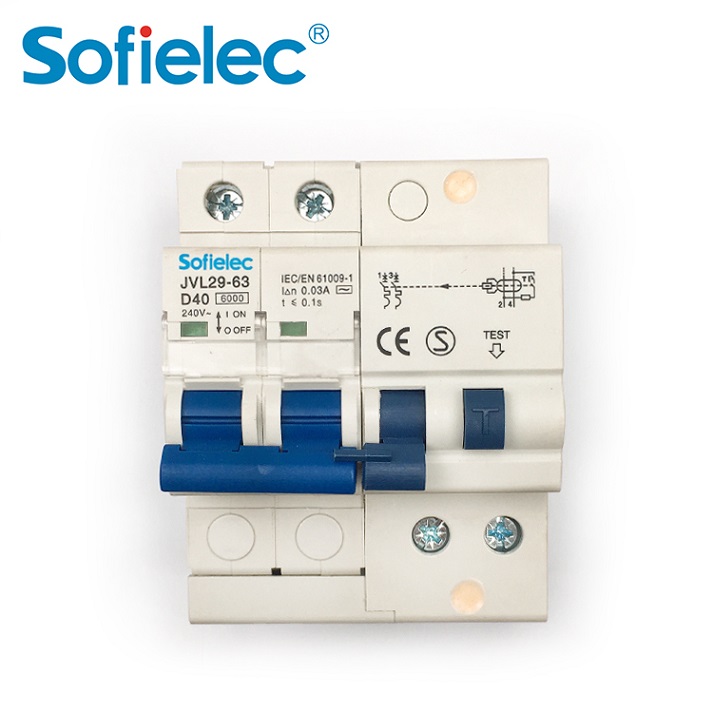
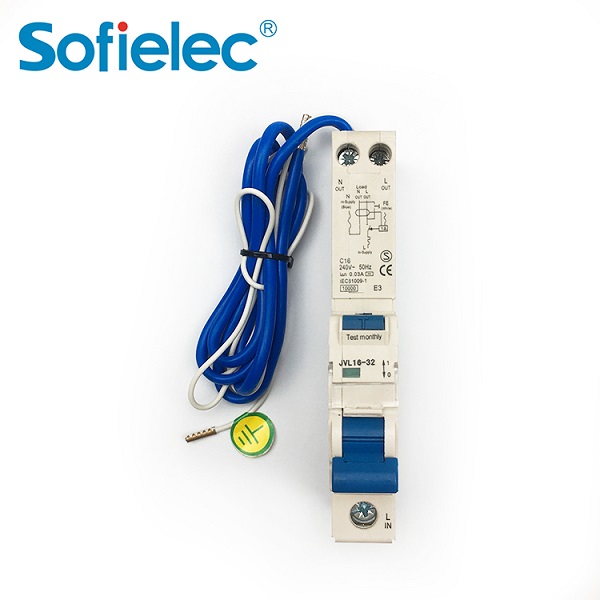
A Wi-Fi MCB looks like a standard miniature circuit breaker from the front, but it carries a remote-control layer that lets an operator open, close, or reclose the circuit over a network. That control layer needs a reference to operate, which is why the wiring instructions call out the neutral connection for 1P and 3P devices. You'll see why that connection matters, how the electrical ratings read across the pole configurations, and where the remote function fits the listed applications.
What Questions Come Up Before Buying a Remote-Controlled Breaker?
Why does the neutral connection matter on 1P and 3P units?
The page notes that for 1P and 3P products, the zero lines of the product and the distribution system must be connected. The remote-control electronics need a neutral reference to operate—the control circuit is referenced to neutral, so without that connection the Wi-Fi module has no return path. On a 2P or 4P device, the neutral pole is part of the breaker itself, so the reference is built in. On a 1P or 3P device, the neutral has to be brought to the product separately.
Does the Wi-Fi function replace the breaker's protection role?
No. The page lists the device as conforming to GB 10963.1 and IEC 60898-1, with a rated short-circuit breaking capacity of 6kA. Those are the same standards a conventional miniature circuit breaker is built to. The Wi-Fi layer adds remote operation on top of the protection function—it doesn't remove the overcurrent and short-circuit protection that the breaker provides locally.
The Current Range and the Breaking Envelope
The frame rating is 125A, and the rated current options are 32A, 40A, 63A, 80A, 100A, and 125A. That's a broad range: a 32A unit suits a single large appliance circuit, while a 125A unit can serve as a sub-main in a small distribution board.
The short-circuit breaking capacity is 6kA, and the rated impact tolerance voltage is 6kV. Those two figures define the fault environment the breaker is built for. A 6kA breaking capacity covers the prospective fault current in a typical final distribution board fed from a transformer of moderate size; the 6kV impulse rating addresses the transient overvoltages that arrive on the supply.
| Parameter | SOFielec WIFI MCB (from the product page) |
|---|---|
| Standard | GB 10963.1, IEC 60898-1 |
| Poles | 1P, 2P, 3P, 4P |
| Rated voltage | AC 230V (1P/2P), AC 400V (3P/4P) |
| Frequency | 50Hz |
| Frame rating | 125A |
| Rated current | 32A, 40A, 63A, 80A, 100A, 125A |
| Breaking capacity | 6kA |
| Impact tolerance voltage | 6kV |
| Protection grade | IP20 |
| Pollution degree | 2 |
| Wiring capacity | 50mm² |
| Tightening torque | 2.5N·m |
Why the 50mm² wiring capacity matters at 125A
A 125A breaker needs conductors sized for that current, and the terminal has to accept them. The page lists a wiring capacity of 50mm², with a tightening torque of 2.5N·m. That capacity covers the copper conductor sizes used on a 125A circuit, so the terminal isn't the limiting factor when the breaker is installed on a high-current sub-main.
What the Remote Function Changes in Practice
The page describes the device as an intelligent WIFI recloser circuit breaker, with applications listed as household, dormitory, enterprise, project, farm, street light, pump, ground heater, water heater, and similar loads.
Those applications share a pattern: the circuit is in a location that isn't convenient to reach, or the load needs to be cycled without sending someone to the panel. A street light circuit on a pole, a pump in a field, or a water heater in a remote building all fit that description. The remote reclose function lets the operator restore the circuit after a trip without travelling to the installation.
-
Street lighting: reclose after a trip without a site visit
-
Pumps and farm loads: cycle power remotely for maintenance
-
Water and ground heaters: switch seasonal loads without panel access
-
Dormitory and enterprise boards: manage circuits across a building
-
Project and temporary sites: control distribution from a central point
Why the neutral connection is a planning step, not a field detail
On a 1P or 3P device, the neutral has to be brought to the product from the distribution system. That means the panel layout has to include a neutral terminal and a conductor run to the breaker position—not just the line conductor. Planning that at the design stage keeps the installation consistent with the product's requirements, rather than discovering the missing neutral when the device is commissioned.
Installation and the Panel Envelope
The device is a modular miniature circuit breaker, mounted on a DIN rail in a distribution board. The page lists the protection grade as IP20, which is the standard rating for a device inside an enclosure—protected against finger contact, not against water or dust. That fits a distribution board installation where the enclosure provides the environmental protection.
The pollution degree is listed as 2, which corresponds to a normal domestic or commercial environment with non-conductive pollution and occasional condensation. The 50mm² wiring capacity and the 2.5N·m tightening torque set the terminal requirements: the conductor has to be within that capacity, and the terminal screw has to be torqued to that value to hold the conductor without damaging it.
-
Mounting: DIN rail, modular MCB format
-
Protection grade: IP20, for enclosure mounting
-
Pollution degree: 2, normal domestic and commercial
-
Wiring capacity: 50mm² maximum conductor
-
Tightening torque: 2.5N·m
-
Neutral requirement: on 1P and 3P devices, bring the neutral to the product
What the 1P/2P/3P/4P options cover
A 1P device switches the line conductor only; a 2P device switches line and neutral; a 3P device switches three lines; and a 4P device switches three lines plus neutral. The page lists AC 230V for 1P and 2P, and AC 400V for 3P and 4P. The choice follows the circuit's earthing and neutral arrangement, and it also determines whether the neutral connection to the product is required separately.
Where the SOFielec WIFI MCB Fits a Distribution Board
The Wi-Fi MCB from SOFielec is built around the remote-control layer the page describes: an intelligent WIFI recloser circuit breaker in 1P through 4P configurations, rated 32A to 125A at AC 230V or AC 400V, with a 6kA breaking capacity and 6kV impulse tolerance. The neutral connection requirement on 1P and 3P devices is the wiring detail that the installation has to plan for. For a facility managing street lights, pumps, heaters, or distributed loads across a campus or a farm, the value sits in the remote reclose function—the circuit can be restored over the network, and the breaker's local protection remains in place.
What to confirm before matching a Wi-Fi MCB to a circuit
Confirm the rated current against the 32–125A options, the pole count against the circuit's neutral arrangement, and the voltage against AC 230V or AC 400V. Check the wiring capacity against the 50mm² terminal limit, and confirm that a neutral conductor is available at the breaker position for 1P and 3P devices. The page's specifications give the starting point; the distribution board layout and the load schedule determine whether the standard unit fits.
Let's Match a Wi-Fi MCB to Your Distribution Board
Send over your circuit current, pole requirement, voltage, and whether a neutral is available at the breaker position—we'll help you check them against the 32–125A range, the 1P–4P options, and the neutral connection requirement. Talk to SOFielec about your Wi-Fi MCB requirements and get a specification-level answer before you commit to the panel.