English
 Español
How to Diagnose a Failing Surge Protective Device (SPD) – Step‑by‑Step Troubleshooting
Your surge protective device (SPD) is the unsung hero of your electrical system. It takes the hit so your equipment doesn‘t. But like any sacrificial component, it has a finite life—and when it fails, it doesn’t always announce itself with smoke or sparks.
Sometimes the visual indicator turns red. Sometimes the green light stays on but the protection is gone. Sometimes there‘s no indicator at all. Knowing how to diagnose failed SPD components is essential for facility maintenance managers, solar plant operators, and anyone responsible for protecting sensitive electronic equipment.
This article walks you through a step-by-step diagnostic process: visual inspection, leakage current measurement, thermal inspection after a lightning event, functional testing, and DC-specific checks. By the end, you’ll know exactly when to replace an SPD—and when it‘s still doing its job.
Check the Window First
The simplest diagnostic step is also the fastest. Most modern SPDs have a visual status indicator.
What the Colors Mean
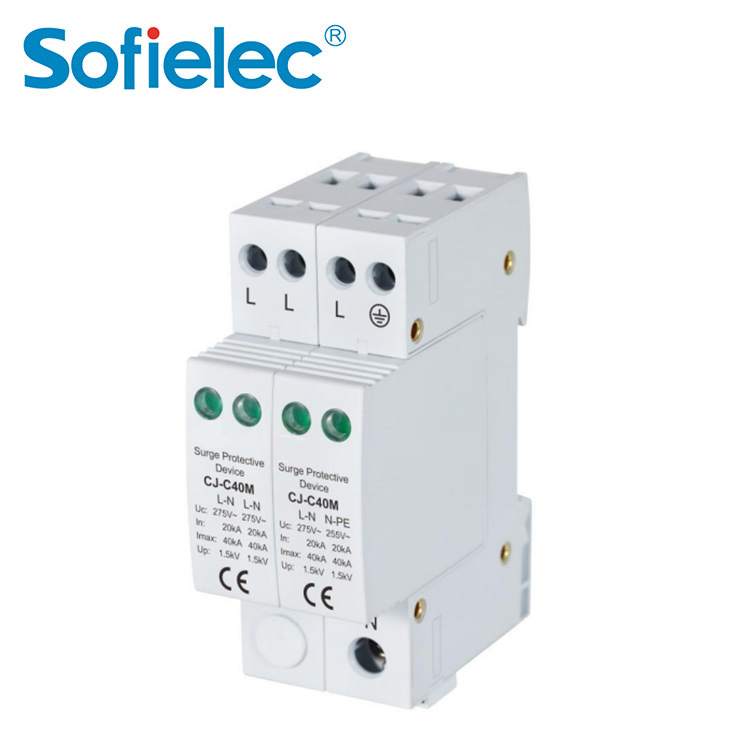
A green or transparent window typically means the SPD is functioning normally. A red window indicates that the protective element has degraded and the device needs replacement. Some SPDs, like Sofielec’s 5KA/10KA/20KA surge protection devices, feature a visual window that displays green when working normally and red when replacement is required.
Remote Signaling Contacts
Many SPDs include remote signaling contacts that can be integrated into a PLC, building management system, or a simple panel indicator light. This allows you to monitor SPD status without walking the panels. If your SPD has this feature, use it—it turns a manual check into an automated alert.
The No-Indicator Problem
Some lower-cost SPDs don‘t have a status indicator at all. For these devices, you can’t rely on visual inspection. You‘ll need to move on to the next diagnostic step—measurement—to determine if the device is still functional.
Measure Leakage Current
Leakage current is the most reliable indicator of SPD health. But this test requires caution.
The Safety Warning
This test must be performed by a qualified electrician wearing appropriate personal protective equipment (insulated gloves, safety glasses). The measurement is taken with the system energized—there is a shock hazard. If you’re not qualified, don‘t attempt this.
How to Measure
Use a clamp-on leakage current meter or a ground resistance tester with leakage current capability. Clamp the meter around the SPD’s PE (ground) lead. The reading tells you how much current is leaking through the MOVs.
What the Numbers Mean
For a new SPD, leakage current should be below 0.1mA. As the MOVs age, leakage current increases. Readings between 0.1mA and 0.5mA indicate normal aging. A reading above 1mA is a clear warning—the MOVs have significantly degraded and the SPD should be replaced. Readings above 5mA indicate an imminent failure risk.
Inspect After a Strike
A lightning strike or major surge event is the most common cause of SPD failure. Always inspect after a known event.
Visual Signs of Damage
Look for cracks, swelling, discoloration, or blackening on the SPD housing. These are signs of internal damage from a high-energy surge. Even if the visual indicator still shows green, physical damage means the device should be replaced. Sofielec‘s pluggable multi-pole SPD CJ-C40M/3(S)+1 uses high-energy MOV and GDT protective elements, but even high-quality components can be damaged by a severe strike.
Thermal Imaging Check
Using a thermal imaging camera, compare the SPD’s temperature to the ambient temperature. If the SPD is more than 10°C above ambient when no surge is occurring, it indicates a partial internal short circuit. The device is drawing current it shouldn‘t be, generating heat, and needs replacement.
Don’t Assume the SPD Did Its Job
Just because downstream equipment survived doesn‘t mean the SPD is still functional. The SPD may have sacrificed itself to protect the load. Always verify SPD status after any significant electrical event.
Test with a Surge Generator
This is the lab-grade diagnostic method—not something you’ll do in the field, but worth understanding.
What the Test Does
A surge generator applies a standardized 8/20µs impulse waveform to the SPD and measures the clamping voltage and whether the device enters a short-circuit mode. This test confirms whether the SPD is still providing the specified protection level.
Who Should Do This
This test is typically performed by the manufacturer or an accredited testing laboratory. It‘s not a field test—you need specialized equipment and controlled conditions. Sofielec’s R&D and quality control processes include rigorous testing to ensure each SPD meets its specifications.
What You Can Ask For
As a B2B buyer, you can request factory test reports from your SPD supplier. These reports show the results of surge generator testing on your specific model. Sofielec provides detailed technical specifications and performance data for their products, including the CJ-C40M/3(S)+1 series.
DC SPDs Need Special Attention
DC systems—solar PV, EV charging, battery storage—use DC SPDs. They fail differently than AC SPDs.
DC Failure Modes
A DC SPD can fail in one of two ways: short circuit (which grounds the DC bus) or open circuit (which removes protection). A short circuit is more dangerous because it can cause the PV array to ground, potentially creating a fire hazard or shock risk.
The Voltage Measurement Test
For solar PV systems, measure the voltage between PV positive and ground, and PV negative and ground. If one of these voltages is close to 0V, the SPD on that polarity may be shorted. This is a simple field test that doesn‘t require specialized equipment—just a multimeter and proper safety precautions.
Always Disconnect DC Before Replacement
When replacing a DC SPD, always open the DC disconnect switch first. DC arcs are self-sustaining and don’t extinguish as easily as AC arcs. Even if the SPD appears to be open circuit, assume it could be shorted and take appropriate precautions.
Questions Maintenance Teams Ask
How long does an SPD last?
SPD lifespan depends entirely on surge exposure. In areas without frequent lightning activity, expect 5-8 years of service life. In regions with frequent thunderstorms, that drops to 2-3 years. Industrial environments with frequent switching transients also shorten SPD life. The visual indicator and leakage current readings are more reliable indicators than calendar time.
Can I put two SPDs in parallel for redundancy?
It‘s generally not recommended. Two SPDs in parallel can resonate with each other or share current unevenly, potentially causing one to fail prematurely. Instead, choose an SPD with a “fail-safe” mode that provides a clear indication when it needs replacement. Sofielec’s pluggable multi-pole SPD CJ-C40M/3(S)+1 offers reliable overload characteristics and a clear visual status indicator.
What happens if I don’t replace a failed SPD?
A failed SPD can fail open (losing protection) or fail short (causing a ground fault, tripping breakers, or even starting a fire). Neither outcome is acceptable. If the green light is off but the system still works, the SPD has lost its protective capability—your equipment is now vulnerable to the next surge. Don‘t wait. Replace it.
My SPD’s green light is off but the system still works. Is it okay?
No. The SPD’s protective function is compromised. Your equipment is running without surge protection. The next lightning strike or switching transient could damage connected loads. Replace the SPD immediately, even if everything appears to be operating normally.
Replace Before It Fails
The best time to replace an SPD is before it fails, not after it takes equipment down with it.
Pre-Season Inspection
Schedule an annual inspection of all SPDs before the lightning season begins. Check visual indicators, document leakage current readings, and replace any devices that show signs of degradation. This is standard practice for commercial facilities, data centers, and solar plants.
The 3-Year Rule
For SPDs without visual indicators—typically lower-cost units—replace them every 3 years as a preventive measure. The cost of replacement is far lower than the cost of equipment damage from an unprotected surge. Sofielec offers SPDs with visual status indicators to eliminate this uncertainty.
Remote Monitoring for Critical Sites
For critical facilities like data centers, hospitals, and industrial control rooms, use SPDs with remote monitoring capabilities. These devices send an alert when they need replacement, allowing you to respond before the next surge event. The CJ-C40M/3(S)+1 from Sofielec is suitable for sub-distribution boards and can be integrated into facility monitoring systems.
Sofielec has been manufacturing surge protective devices with a focus on quality and reliability. The company offers a range of SPDs for different applications: from residential distribution boxes to industrial sub-distribution panels. The Pluggable Multi-Pole SPD CJ-C40M/3(S)+1 features a reliable voltage protection level and safe overload characteristics, with high-energy MOV and GDT protective elements. It’s rated at In=20kA (8/20μs) and classified as Class I+II / Type 1+2, making it suitable for sub-distribution boards in commercial and industrial facilities. Sofielec‘s products undergo rigorous testing to meet international standards, ensuring they provide the protection your equipment needs when it matters most.
Diagnosing a failing SPD doesn’t require a PhD in electrical engineering—but it does require a systematic approach. Start with the visual indicator. Move to leakage current measurement if you have the training and equipment. Inspect after any known surge event. For DC systems, add voltage measurements to your checklist. And don‘t wait for the SPD to fail before replacing it. The cost of preventive replacement is small compared to the cost of equipment damage. Sofielec’s SPDs offer the reliability and visual indication you need to keep your protection system healthy.
Ready to audit your facility‘s surge protection? Reach out to Sofielec’s technical team—they can provide product specifications, replacement recommendations, and application guidance to keep your equipment protected.