 English
 Español
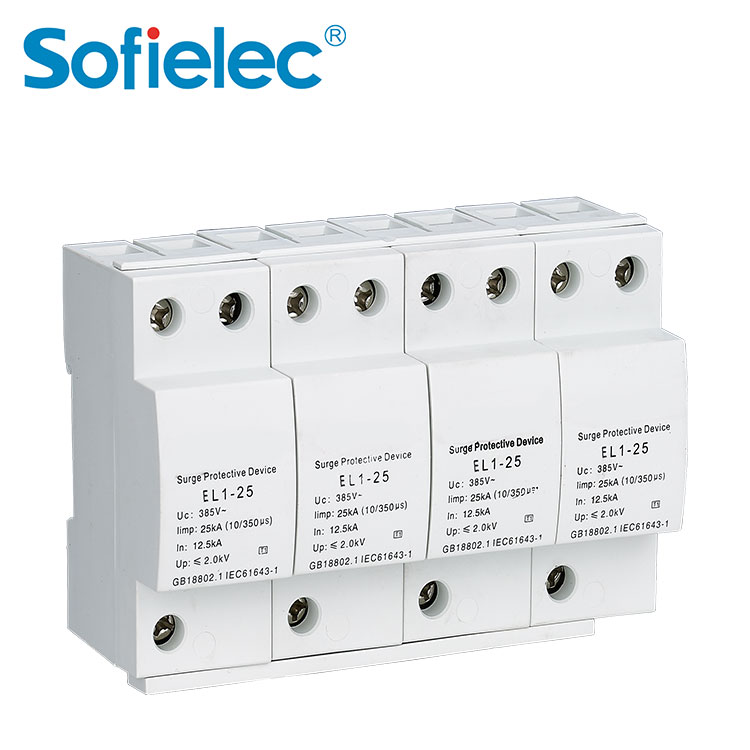
The working principle of the EL1-25 25KA/150KA 275V/385V Surge Protective Device is as follows: The surge protector is generally installed at both ends of the protected equipment and grounded. Under normal operating conditions, the surge protector presents high impedance to normal power frequency voltage, and almost no current passes through it, which is equivalent to an open circuit; when a transient overvoltage occurs in the system, the surge protector has high resistance to high-frequency transient overvoltage. The voltage presents low impedance, which is equivalent to short-circuiting the protected equipment.
By installing the EL1-25 25KA/150KA 275V/385V Surge Protective Device, it can quickly absorb and dissipate overvoltage, directing it to the ground, thus protecting the equipment from damage, extending its life, and improving the reliability of the equipment.
| Categories | SPD Surge Protective Device |
| Model | EL1-25 |
| Parameters | EL1-25 |
| Maximum continuous operating voltage Uc(V~) | 385V 275V |
| Voltage protection level UP(KA) | ≤2.0≤1.8 |
| Maximum dischargecurrent(8/20us)(KÄ) | 150 |
| Nominal dischargecurrent (8/20us) (KA) | 25 |
| Response time (ns) | <100 |
| IP Grade | IP20. |
| quipped with front fuse or circuit breaker | 125A |
| Cross-sectional area of connecting conductor | 25~50mm² |
| Application | Incoming line first level protection |
EL1-25 25KA/150KA 275V/385V Surge Protective Device MAIN TECHNICAL PARAMETERS
| Parameters | Model | ||||||
| EL1-15 | El1-25 | El1-50 | |||||
| Maximum continuous operating voltage Uc(V~) | 385V | 275V | 385V | 275V | 385V | 275V | |
| Voltage protection levelUP | ≤1.5 | ≤1.2 | ≤2.0 | ≤1.8 | ≤2.5 | ≤2.0 | |
| Surge current(10/350)Limp | Ipeak | 15KA | 25KA | 50KA | |||
| Etymology of electricity | 7.5AS | 12.5AS | 25AS | ||||
| Energy | 56.25KJIQ | 156.25KJIQ | 625KJIQ | ||||
| Maximum discharge current(8/20us)(KA) | 120KA | 150KA | 20KA | ||||
| Nominal discharge Nominal discharge | 15KA | 25KA | 50KA | ||||
| Response time (ns) | <100 | ||||||
| IP Grade | IP 20 | ||||||
| Work environment(℃) | -40℃~+85℃ | ||||||
| Equipped with front fuse or circuit breaker | 125A 125A | ||||||
| Cross-sectional area of connecting conductor | 25~50mm² | ||||||
| Application | Incoming line first level protection | ||||||
| Remote communication function | can reorder | ||||||
| Remark | Other maximum continuous working voltage Uc can be customized | ||||||
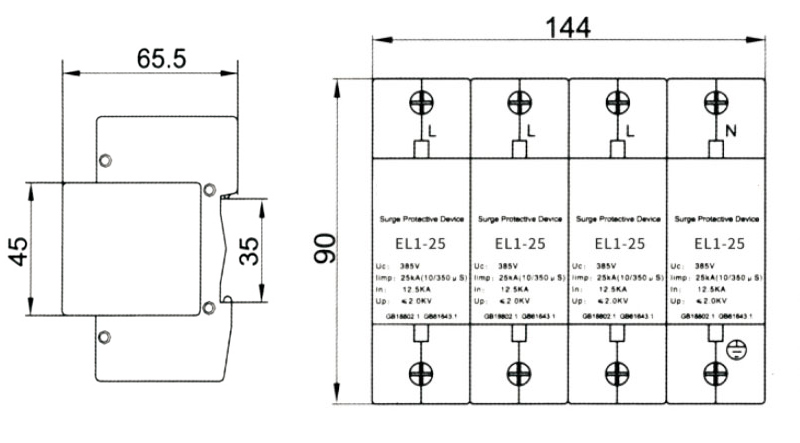
EL1-25 25KA/150KA 275V/385V Surge Protective Device SHAPE SIZE
EL1-25 25KA/150KA 275V/385V Surge Protective Device Video
DESCRIPTION OF PRODUCTS
cabinet (box), with high lightning discharge capacity, no continuous current,The maximum impulse current (10/350 ps) of a single module can reach limp=12.5KA, limp=15KA, limp=25KA, limp=35KA, limp=50KA, and the maximumdischarge current (8/20us) can reach Imax=100KA, Imax=120KA, Imax=150KA,Imax=160KA, Imax=200KA.
> Is an SPD Surge Protective Device Rated for 80kA Imax?
An SPD Surge Protective Device with 5-80kA discharge capacity, built-in disconnector, and visual status window — built for low-voltage distribution system protection...
> Does a Float Switch Need IP68 for Hot Water?
A Float Switch with IP68 sealing, AC 220V rating, and 60°C water temperature tolerance — built for reliable liquid level control in pumps and tanks.
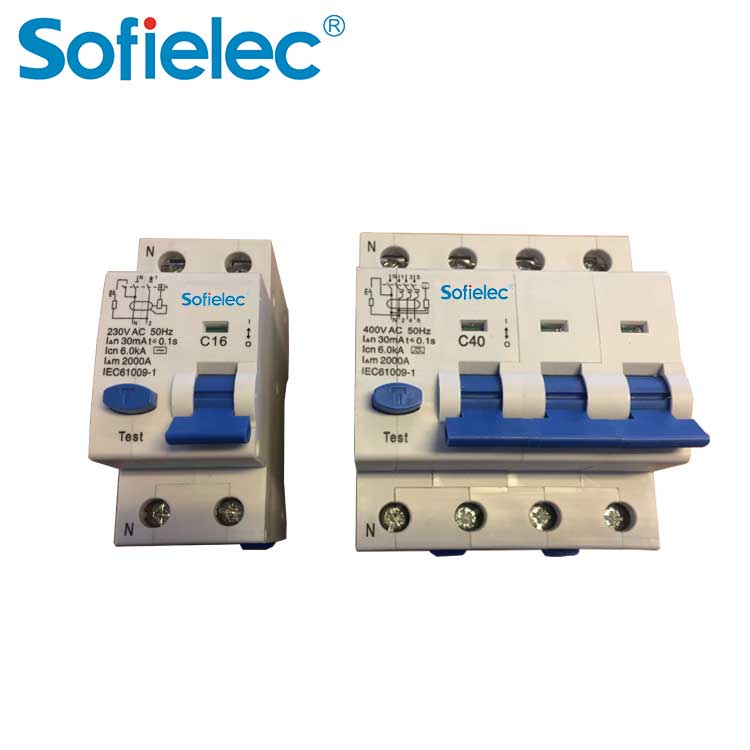
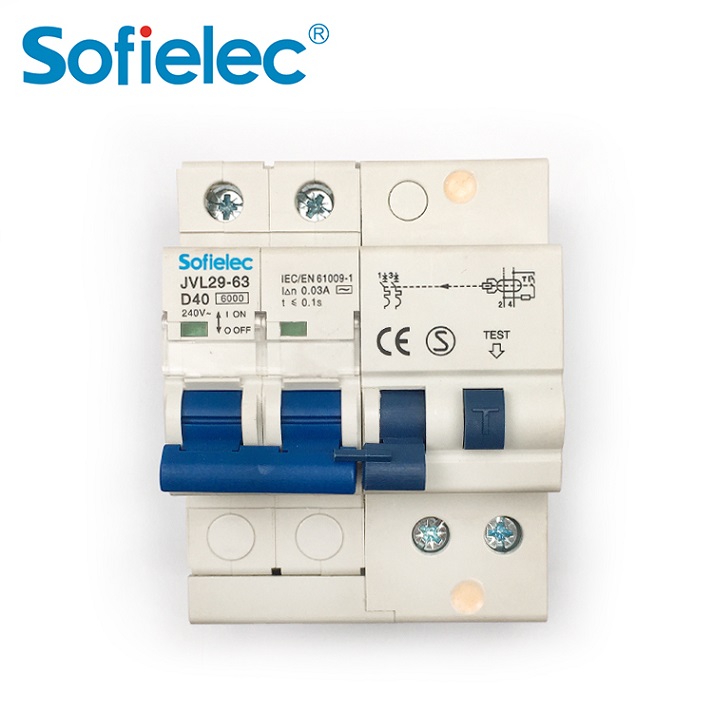
> Does a Circuit Breaker Need Both Overcurrent and Leakage Protection?
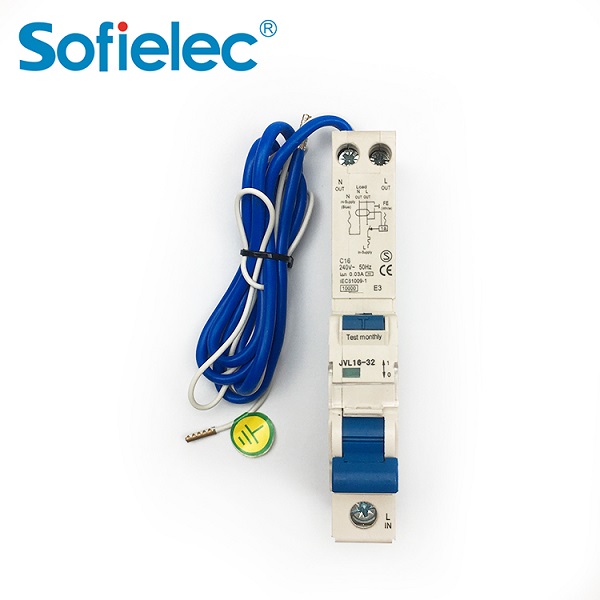
A magnetic RCBO that combines overcurrent and earth leakage protection in a compact two-module design — featuring 10kA breaking capacity and CE approval for resident...
> What Makes the ASFT Series Outperform Other Float Switches?
A float switch with integrated square-axis multi-pole design, welding-process contacts with silver solder pads, and bite-process terminal blocks — built for reliable...