 English
 Español
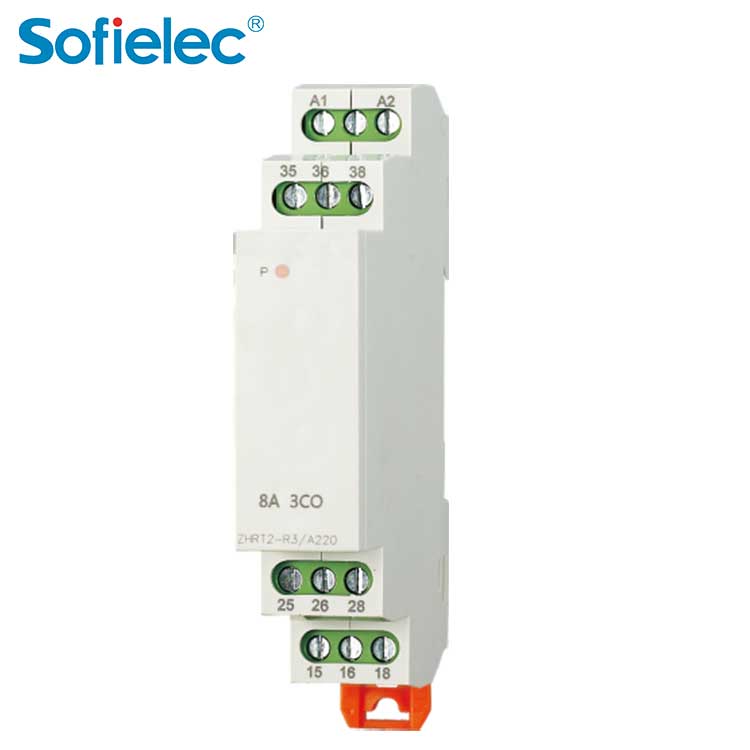
| Categories | Time Relay |
| Model | ZHRT2-R3 |
| Rated control supply voltage | DC12V. AC/DC 24V ~240V 50/60Hz |
| Rated power consumption | ≤1W |
| Altitude | ≤2000m |
| Contact configuration capacity(A) | 1C/O 16A;2C/O 16A;3C/O 8A |
| IP Class | IP 20 |
| Contact capacity | 1C/O,2C/O,3C/O |
| Standard Guide | width 35mm |
Function
Applications
Used in air conditioning units, elevator machine room, pumps, fans and other motor control applications, as protection of over-voltage, under voltage, phase failure, phase sequence and phase unbalance. When the power supply is abnormal, turn off power supply to protect the equipment.
Features
LED indicator shows working status.multi-set contact and multi rated voltage optional,maximum contact currentt 16A. DIN-rail mounting.
| Rated control supply voltage | DC12V. AC/DC 24V ~240V 50/60Hz |
| Rated power consumption | ≤1W |
| Electrical life | 105 |
| Mechanical life | 106 |
| Altitude | ≤2000m |
| IP Class | IP20 |
| Class of pollution | II |
| Contact configuration capacity(A) | 1C/O,2C/O 16A,3C/O 8A |
| Contact capacity | 1 C/O , 2C/O ,3 C/O |
| Standard Guide | width:35mm(IEC/EN60715) |
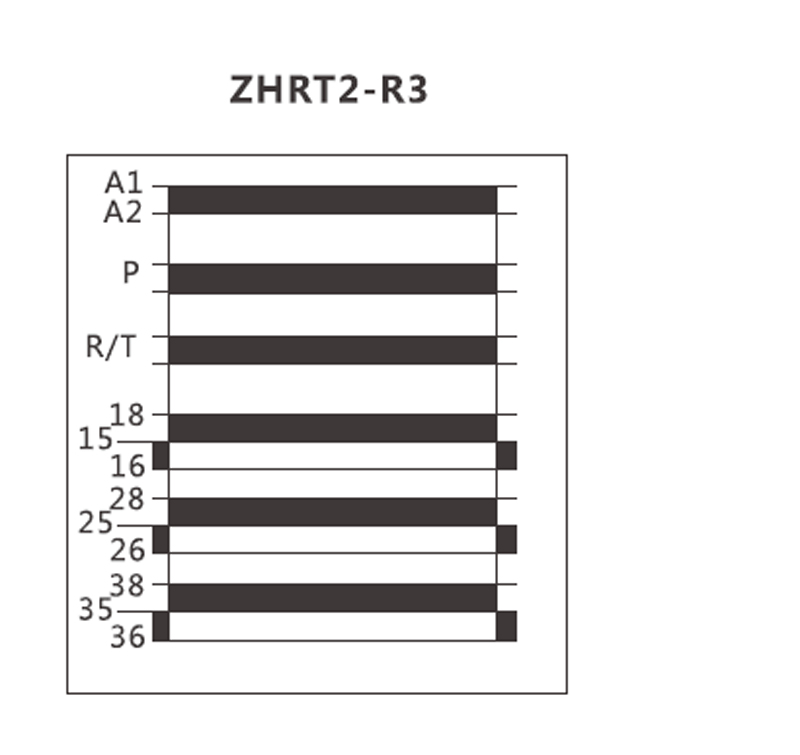
Function Diagram
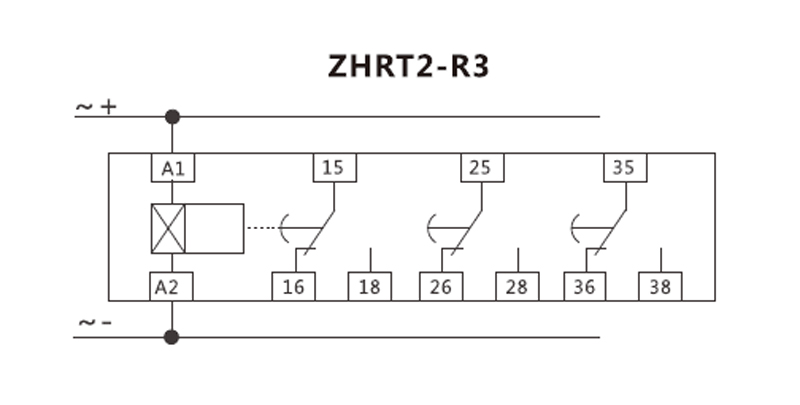
Wiring Diagram
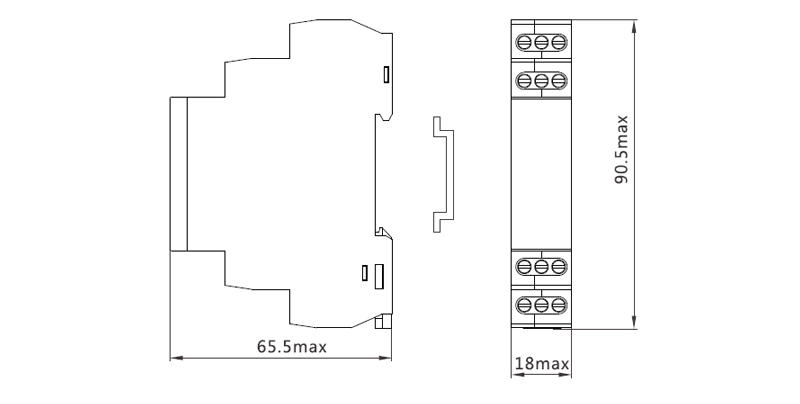
Dimensions
> Does a Float Switch Need IP68 for Hot Water?
A Float Switch with IP68 sealing, AC 220V rating, and 60°C water temperature tolerance — built for reliable liquid level control in pumps and tanks.
> Does a Circuit Breaker Need Both Overcurrent and Leakage Protection?
A magnetic RCBO that combines overcurrent and earth leakage protection in a compact two-module design — featuring 10kA breaking capacity and CE approval for resident...
> What Makes the ASFT Series Outperform Other Float Switches?
A float switch with integrated square-axis multi-pole design, welding-process contacts with silver solder pads, and bite-process terminal blocks — built for reliable...
> How Does a DC Series Circuit Breaker Speed Up Fault Finding?
A DC series circuit breaker with 1-63A ratings, 10kA breaking capacity, 6.2kV impulse withstand, and central-staying trip indication — built for reliable low-voltage...