English
 Español
Does a Circuit Breaker Need Both Overcurrent and Leakage Protection?
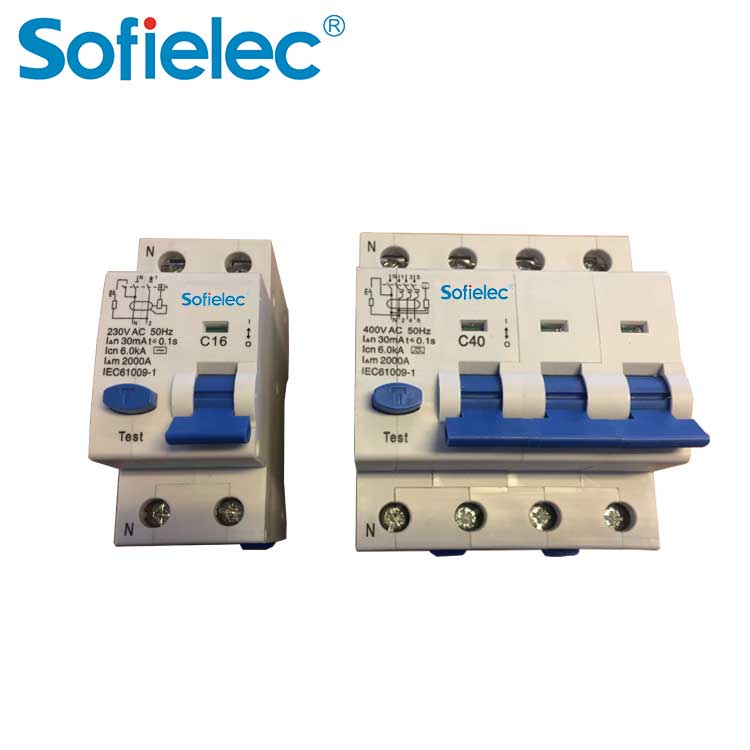
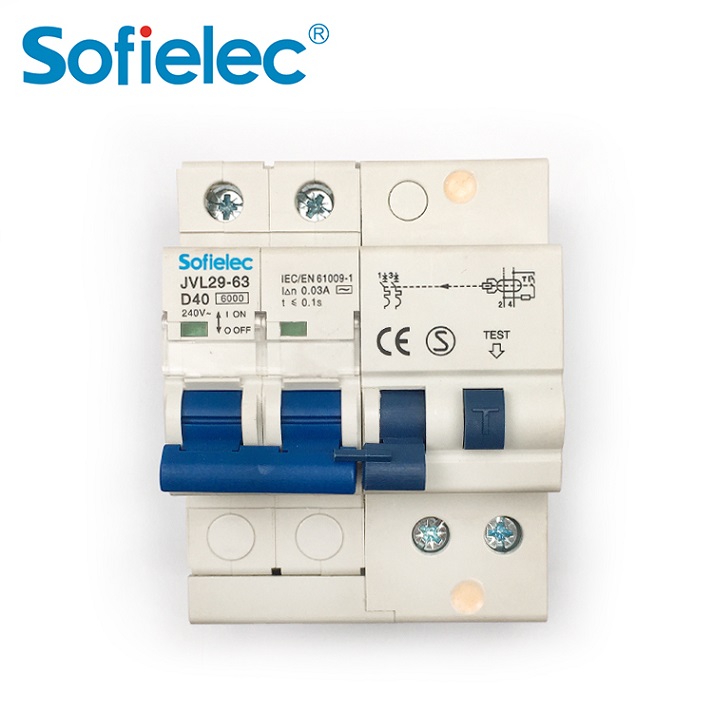
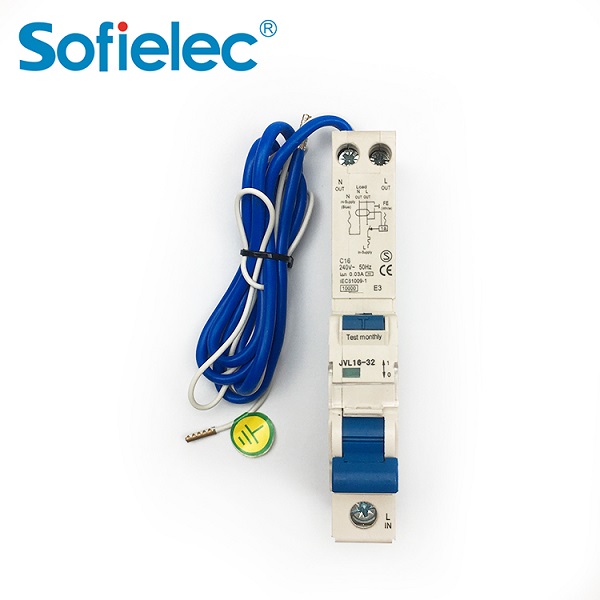
You're designing a distribution board, and you've got two choices—install separate devices for overcurrent and earth leakage protection, or use a single device that does both. A circuit breaker that combines both functions saves space, simplifies wiring, and reduces component count. The HK Series Magnetic RCBO was engineered to deliver comprehensive protection in a compact form factor—providing protection against earth fault/leakage current, short-circuit, overload, and isolation in a single unit. This article walks through what makes an RCBO different from a standard MCB or RCCB, why the magnetic trip mechanism matters for reliability, and how the 10kA breaking capacity and CE approval ensure the device meets the demands of modern electrical distribution systems.
First Questions About RCBO Protection Devices
Two Practical Concerns—Answered Directly
Q: What's the difference between an RCBO and a standard MCB?
A: A standard MCB (Miniature Circuit Breaker) provides protection against overcurrent and short-circuit only. An RCBO (Residual Current Circuit Breaker with Overcurrent Protection) adds earth leakage protection—it trips on both overcurrent events and residual current faults, combining the functions of an MCB and an RCCB in a single device.
Q: What current ratings and configurations are available?
A: The HK Series offers 1P+N configurations from 6A to 63A and 3P+N configurations from 6A to 40A. Residual operating current options include 30mA, 100mA, and 300mA.
The Protection Argument — Why One Device Is Better Than Two
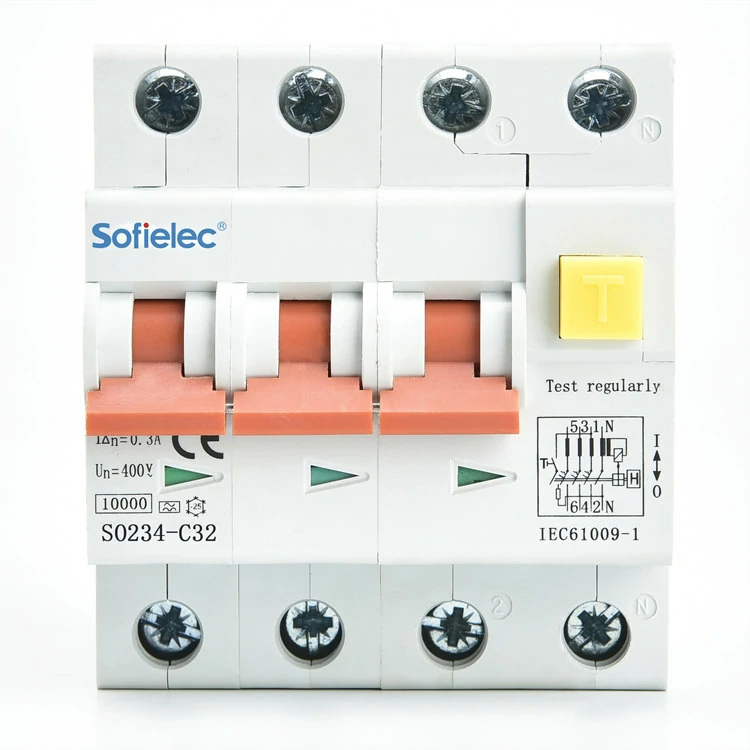
Separate overcurrent and residual current devices take up more space, require more wiring, and introduce more potential failure points. An RCBO consolidates both functions into a single unit, delivering comprehensive protection against earth fault/leakage current, short-circuit, overload, and isolation. This integration is particularly valuable in residential and commercial distribution systems where panel space is at a premium. The HK Series achieves this in a compact two-module or four-module format that matches the size of a standard RCCB—meaning you don't sacrifice space to gain functionality.
What the HK Series Actually Protects Against
The device provides protection against four distinct fault types: earth fault/leakage current (when current escapes through an unintended path), short-circuit (when conductors make direct contact), overload (when current exceeds the rated capacity), and isolation (a physical disconnect for safe maintenance). It also provides complementary protection against direct contact by the human body—a critical safety feature in any electrical installation.
The Space Advantage of Integrated Protection
A standard distribution board might require separate MCBs and RCCBs, consuming multiple module positions. The HK Series RCBO combines both functions in a two-module (1P+N) or four-module (3P+N) footprint that matches regular RCCB size. This compact design frees up space for additional circuits or allows for smaller enclosures—reducing material costs and installation time.
Magnetic Trip Mechanism — Speed and Reliability
The HK Series uses an electro-magnetic type trip mechanism. Unlike thermal-magnetic breakers that rely on bimetallic strips (which can be affected by ambient temperature), electro-magnetic breakers trip based purely on current—delivering faster and more consistent response times.
Instantaneous Tripping at 0.1 Seconds
The tripping duration is instantaneous at 0.1 seconds. When a fault occurs, the device responds almost immediately—limiting the energy that can flow through the fault and reducing the risk of equipment damage or fire.
AC and A Type Residual Current Characteristics
The HK Series supports both AC and A type residual current characteristics. AC type responds to alternating sinusoidal residual currents; A type responds to both alternating and pulsating direct residual currents—making it suitable for circuits with electronic loads.
Breaking Capacity — 10kA That Matters
The rated short-circuit capacity of the HK Series is 10kA. This is the maximum fault current the device can safely interrupt without being destroyed. In practical terms, 10kA covers most residential and light commercial installations where the prospective short-circuit current at the distribution board is typically below this threshold.
What 10kA Means for Your Installation
If a short-circuit occurs, the current can spike to thousands of amps. A breaker with insufficient breaking capacity may fail to interrupt the fault—potentially causing arcing, fire, or equipment destruction. The HK Series' 10kA rating ensures it can handle the fault currents typical of most buildings. CE approval and a 10kA Ics test report provide independent verification of this capability.
Ics vs. Icu — Understanding the Rating
Ics is the rated short-circuit breaking capacity—the fault current the breaker can interrupt and still be serviceable afterward. Icu is the ultimate breaking capacity—the fault current it can interrupt once, after which it must be replaced. The HK Series' 10kA Ics rating means it can handle a 10kA fault and remain functional, providing an extra margin of safety.
Installation Flexibility — DIN Rail and Panel Mounting
The HK Series is designed for flexible installation in a variety of distribution boards. It mounts on a symmetrical 35mm DIN rail—the industry standard for residential and commercial enclosures. Panel mounting is also supported for applications where DIN rail isn't available.
Connection Capacity — Up to 16mm²
The pillar terminal with clamp accepts flexible conductors up to 10mm² and rigid conductors up to 16mm². This capacity covers most wiring configurations in residential and commercial installations, from small branch circuits to larger sub-main feeds.
Electro-Mechanical Endurance — 4000 Cycles
The device is rated for 4000 electro-mechanical cycles. This means it can be switched on and off thousands of times without mechanical failure—important for applications where the breaker is used as a regular switching device, not just for fault protection.
Technical Specifications — HK Series RCBO at a Glance
| Parameter | Specification |
|---|---|
| Model Series | SO232 / SO234 |
| Type | Electro-magnetic type RCBO |
| Pole Configurations | 1P+N, 3P+N |
| Residual Current Characteristics | AC, A |
| Tripping Curves | B, C |
| Rated Short-circuit Capacity | 10kA |
| Rated Current (1P+N) | 6, 10, 16, 20, 25, 32, 40, 50, 63A |
| Rated Current (3P+N) | 6, 10, 16, 20, 25, 32, 40A |
| Rated Voltage | 230/400VAC |
| Rated Frequency | 50/60Hz |
| Residual Operating Current | 30, 100, 300mA |
| Tripping Duration | Instantaneous 0.1s |
| Electro-mechanical Endurance | 4000 cycles |
| Connection Terminal | Pillar terminal with clamp |
| Flexible Conductor Capacity | 10mm² |
| Rigid Conductor Capacity | 16mm² |
| Installation | 35mm DIN rail / Panel mounting |
| Approvals | CE approval, 10kA Ics test report available |
Applications — Where RCBO Protection Is Essential
The HK Series serves residential and commercial electrical distribution systems where both overcurrent and earth leakage protection are required:
Residential Distribution Boards
In homes, RCBOs provide protection for individual circuits—lighting, power outlets, kitchen appliances, and air conditioning. The 30mA residual current setting provides the sensitivity needed for protection against electric shock.
Commercial and Office Buildings
Commercial installations benefit from the HK Series' 10kA breaking capacity and multiple current ratings. The 100mA and 300mA settings are suitable for circuits where some leakage is expected—such as those serving IT equipment or machinery.
Industrial Control Panels
For industrial applications, the 3P+N configuration (up to 40A) provides protection for three-phase equipment. The B and C tripping curves accommodate different inrush characteristics—B curve for resistive loads, C curve for inductive loads like motors.
Straight Answers About RCBO Circuit Breakers
Q: Why choose an RCBO over separate MCB and RCCB devices?
A: An RCBO combines both functions in a single unit, saving panel space, reducing wiring complexity, and lowering component count. It's particularly valuable in residential and commercial distribution boards where space is limited.
Q: What's the difference between B curve and C curve tripping?
A: B curve breakers trip at 3-5 times rated current, suitable for resistive loads like lighting and heating. C curve breakers trip at 5-10 times rated current, suitable for inductive loads like motors and transformers that have higher inrush currents.
Q: Which residual current setting should I choose?
A: 30mA is standard for protection against electric shock in general circuits. 100mA and 300mA are used where some leakage is expected—such as circuits with IT equipment, or where coordination with upstream RCDs is required.
Q: What approvals does the HK Series carry?
A: The HK Series has CE approval and a 10kA Ics test report is available, confirming its compliance with international standards for safety and performance.
Request an RCBO Circuit Breaker Configuration
A circuit breaker that combines overcurrent and earth leakage protection in a compact, two-module design is the practical choice for residential and commercial distribution systems where panel space is at a premium. The HK Series Magnetic RCBO (SO232/SO234) delivers 10kA short-circuit breaking capacity with Ics rating, 1P+N configurations from 6A to 63A and 3P+N from 6A to 40A, residual operating current options of 30mA, 100mA, and 300mA, instantaneous tripping at 0.1 seconds, AC and A type residual current characteristics, B and C tripping curves for different load types, CE approval with 10kA Ics test report available, and 35mm DIN rail or panel mounting with 16mm² rigid conductor capacity.
Whether you're designing residential distribution boards, commercial electrical systems, or industrial control panels, this RCBO offers the comprehensive protection and installation flexibility that modern electrical installations demand. With electro-mechanical endurance of 4000 cycles and compact two-module or four-module footprint matching regular RCCB size, it's built for reliable, long-term performance across diverse applications.
Contact Sofielec for an RCBO circuit breaker configuration assessment → their team can help you select the right pole configuration, current rating, residual current setting, and tripping curve for your specific distribution system requirements. Get a breaker that protects against everything—overcurrent, short-circuit, and earth leakage—all in one device.