English
 Español
What Makes the ASFT Series Outperform Other Float Switches?
You're specifying a multi-pole switch for a control system, and the product choices look similar on paper. But the differences—in synchronization, contact integrity, and connection reliability—become obvious after installation. A float switch that can't keep its poles synchronized, uses riveted contacts that heat up under load, or has terminals that work loose over time is a switch that creates problems rather than solves them. The ASFT series isolation and conversion switch from SofiElEC was engineered to outperform conventional designs in three critical areas: an integrated square-axis handle that ensures all poles open and close together, welding-process contacts with silver solder pads that handle higher currents with lower temperature rise, and a "bite" process terminal block that keeps connections secure. This article examines how the ASFT series compares to other manufacturers in each of these key areas—and why those differences matter for your control system.
Questions Control System Engineers Ask About Multi-Pole Switches
Two Practical Concerns—Answered Up Front
Q: What's the real difference between the ASFT series and other float switches on the market?
A: The ASFT series outperforms conventional designs in three areas: multi-pole synchronization (integrated shaft vs. assembled components), contact reliability (welding process with silver solder pads vs. riveting technology), and terminal connection security ("bite" process vs. conventional embossing).
Q: Why should I care about these differences in a float switch?
A: Poor synchronization leads to arcing and contact welding. Riveted contacts run hotter and fail sooner under fault conditions. Loose terminals cause intermittent faults that are difficult to troubleshoot. The ASFT series addresses all three—directly improving system reliability and reducing maintenance costs.
The Three Key Differences That Set the ASFT Series Apart
The ASFT series is designed with three engineering decisions that directly affect performance and reliability. Each decision represents a choice between doing what's adequate and doing what's right for long-term operation.
| Component | ASFT Series | Other Manufacturers |
|---|---|---|
| Multi-Pole Shaft | Integrated square-axis handle | Two short, thin assembled components |
| Synchronization | Better during opening and closing | Poor during opening and closing |
| Contacts | Welding process + silver solder pads | Riveting technology |
| Contact Performance | Low temperature rise, high short-circuit withstand | Temperature rise, low short-circuit withstand |
| Terminals | "Bite" process with teeth gripping wire | Conventional embossing treatment |
| Terminal Security | Tighter, more firm connection | Easy to pull out larger wires |
Integrated Shaft vs. Assembled Components — Why Synchronization Matters
The ASFT series adopts an integrated square-axis through multipole handle design. This isn't a minor difference—it's the foundation of reliable multi-pole switching. Other manufacturers use two short and thin instrument components for assembly and linkage, resulting in poor synchronization during opening and closing. When components are assembled from multiple pieces, there's always play. One pole opens a fraction of a second before another, creating arcing that erodes contacts and generates heat. The integrated shaft eliminates this play. When you operate the handle, every pole moves exactly the same distance at exactly the same time—every time.
Welded Contacts vs. Riveted Contacts — What You're Really Paying For
The contact point is where electrical performance is determined. The ASFT series adopts a welding process, adding silver solder pads for high-temperature fusion during welding. The results are measurable: low temperature rise, high short-term withstand current, and strong short-circuit making ability. Other manufacturers use riveting technology, which delivers low cost but also temperature rise, low short-term withstand current, and low short-circuit making ability. In the field, the difference shows up as reliability under stress. When a fault occurs, welded contacts handle the current and survive. Riveted contacts heat up, loosen, and fail. The higher cost of welding is an investment in reliability that pays off over the life of the system.
Bite-Process Terminals vs. Embossed Boards — Why Connections Fail
Connection reliability is a common failure point in electrical switches. The ASFT series uses a terminal block that adopts the "bite" process: when wiring, the "teeth" directly bite the wire, making the contact surface between the wire and the connecting plate tighter and more firm, and the temperature rise at the connection point lower. Other manufacturers use conventional embossing treatment on their wiring boards, making it easy to pull out wires with larger cross-sectional areas after connecting them. In a control system, a loose connection can cause intermittent faults that are difficult to troubleshoot. The bite process prevents this—the connection stays tight and stays cool.
Why Welded Contacts Handle More Current and Run Cooler
The contact design of a switch determines its current-handling capacity, temperature rise, and fault survival. The ASFT series' welding process with silver solder pads delivers performance that riveted contacts simply can't match.
Silver Solder Pads — The Secret to Low Temperature Rise
The welding process adds silver solder pads for high-temperature fusion. Silver solder provides a metallurgical bond that creates a permanent, low-resistance connection between the contact and the base material. The result is low temperature rise—less heat means less stress on surrounding components and longer switch life.
High Short-Term Withstand Current — Protection When You Need It Most
Welded contacts deliver high short-term withstand current and strong short-circuit making ability. In a fault condition, the contacts must survive the surge without welding together or failing open. Riveted contacts have low short-term withstand current—they're more likely to fail when it matters most. The ASFT series is built to survive the fault.
Terminal Design That Doesn't Let Go
Loose connections are the leading cause of intermittent electrical faults. The ASFT series addresses this with a terminal design that holds securely.
How the 'Bite' Process Creates a Tighter Connection
When wiring, the "teeth" directly bite the wire, making the contact surface tighter and more firm. This isn't a connection that works loose over time—the bite holds. The result is lower temperature rise at the connection point, which means less heat and more reliable operation.
Why Loose Wires Are the Leading Cause of Control System Failures
Other manufacturers use conventional embossing treatment on their wiring boards. When you connect a larger wire, it's easy to pull out. In a control system, a loose wire can cause intermittent faults that are difficult to diagnose. The ASFT series' bite process prevents this—the connection stays secure regardless of vibration or temperature cycling.
The Pull Connection Method — More Torque, More Security
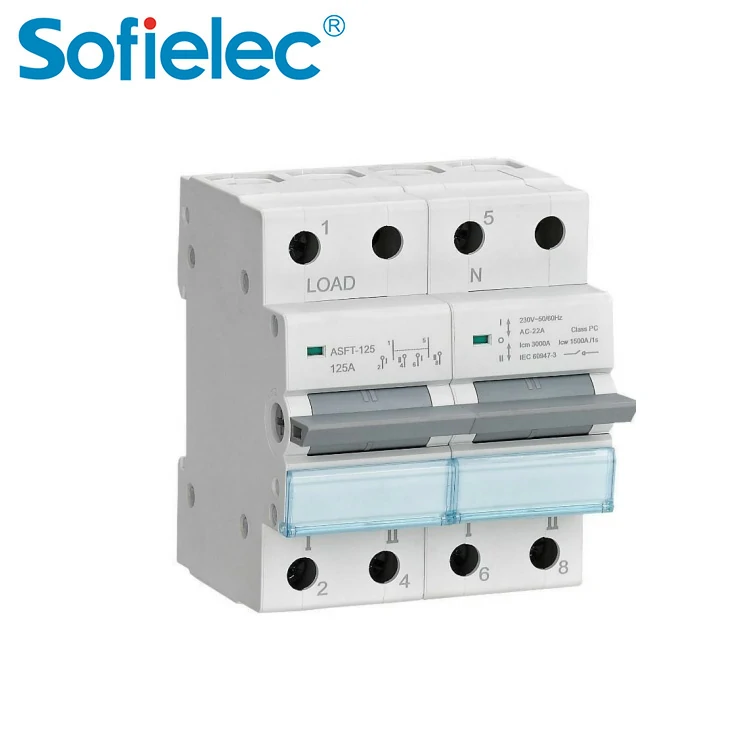
The ASFT-63 series uses the same pull connection method as the 125 model. This design choice has a direct impact on wiring reliability and connection integrity.
63A and 125A Models Share the Same Reliable Wiring Design
The pull connection method provides greater torque during wiring, making the wiring more secure, and the temperature rise at the wiring point is lower. A secure connection means less maintenance, fewer callbacks, and more reliable system operation.
Lower Temperature Rise at the Connection Point
Other manufacturers use a crimping method with hanging iron plates at the connection screws, which reduces the torque during wiring, makes it easy to pull out the cables, and increases the temperature at the connection point. The ASFT series' pull connection method addresses all three issues.
Straight Answers on ASFT Series Quality
Q: What's the Real Cost Difference Between Welded and Riveted Contacts?
A: Welded contacts with silver solder pads have a higher upfront cost. However, they deliver lower temperature rise, higher short-term withstand current, and stronger short-circuit making ability. Riveted contacts may cost less initially, but they run hotter and fail sooner under stress. Over the life of the system, the total cost of ownership is lower with welded contacts.
Q: How Does the ASFT Series Compare to Other Float Switches?
A: The ASFT series outperforms conventional designs in three key areas: integrated shaft for better multi-pole synchronization, welded contacts for lower temperature rise and higher fault withstand, and bite-process terminals for secure, low-resistance connections.
Request a Quote for Your Control System
A float switch that outperforms conventional designs in synchronization, contact reliability, and connection security is the foundation of any reliable multi-pole control system. The ASFT series from SofiElEC delivers an integrated square-axis design for better pole synchronization, welding-process contacts with silver solder pads for low temperature rise and high short-circuit withstand, bite-process terminal blocks for secure, low-resistance connections, the same pull connection method on both 63A and 125A models, and large opening distance, excessive travel, and high final pressure for long-term reliability. By choosing the ASFT series, you're investing in a switch that performs better where it matters most—on the job, year after year.
Contact SofiElEC for a quote or technical consultation → their team can help you select the right model and configuration for your specific control system requirements. Get a float switch that outperforms the alternatives.